Christian, apple grower
Corazza Christian Farm, Brez (Trento, Italy)
A fruit-growing farm specialising in the production of Golden Delicious, Evelina and Red Delicious apples.
Corazza Christian Farm, located in Brez (Trento), where BioAksxter® has been used for several years with satisfactory results, is a family-run fruit-growing farm specialising in the production of Golden Delicious, Evelina and Red Delicious apples. The apples are grown using integrated production methods and supplied to the Società Agricoltori Brez Arsio Cloz cooperative in Brez (Trento).
The farm covers just over 1.5 hectares, slightly less than the average area of fruit-growing farms in the province of Trento. Most of the land is planted with Golden Delicious, covering approximately 1.3 hectares spread across several plots.
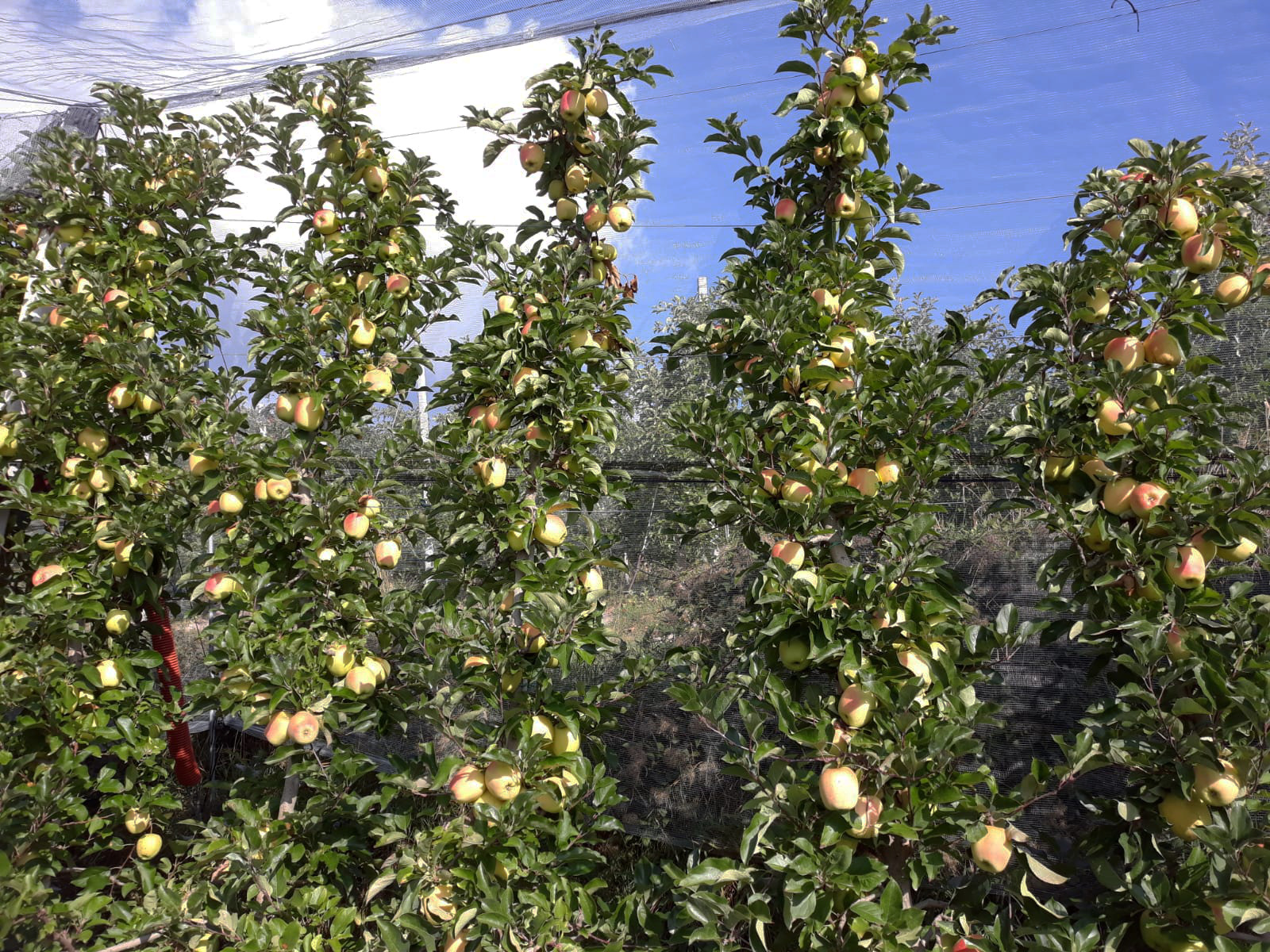
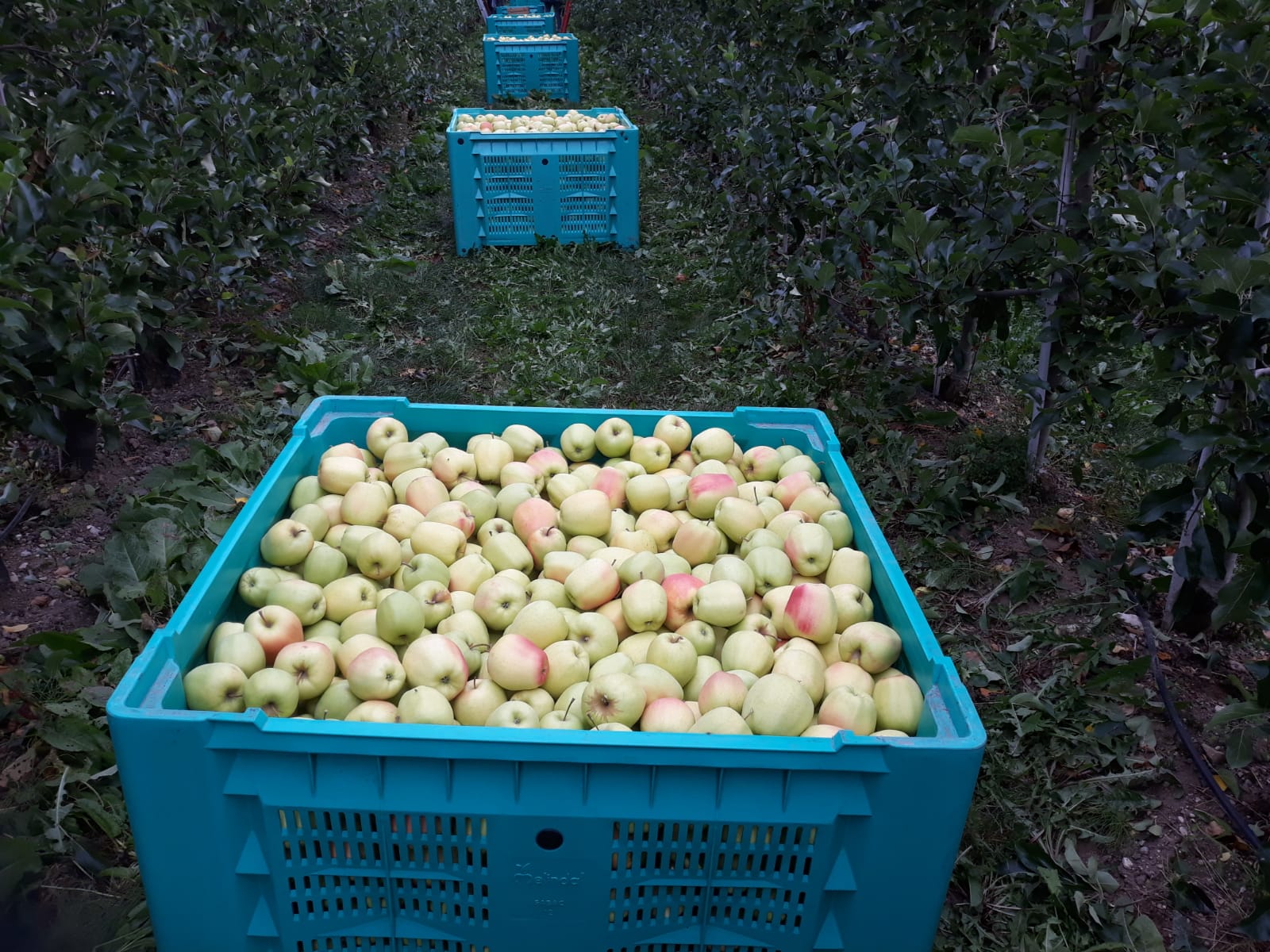
Val di Non is the main fruit-growing area in Trentino. Approximately 70% of the apple orchards in the province of Trento are located in this valley. Golden Delicious is still the most widely grown variety and accounts for the largest share of the gross marketable production value of these fruit-growing farms. For many farms, therefore, their economic performance and profitability depend primarily on this cultivar.
Payments to cooperative members for the 2018 harvest will be remembered as among the lowest ever, with an average across all varieties of 34.9 euro cents/kg. This was due to the high level of European apple production in 2018, driven by increased fruit production in countries such as Poland, which contributed to an all-time record of 13.2 million tonnes, compared with an average of 11.3 million tonnes over the previous five years.
The abundance of apples on the market resulted in a large supply of produce without a corresponding increase in consumer demand. This led to a fall in apple prices and consequently lower payments to cooperative members. The reduction in revenue placed many farms under financial pressure, given their high production costs, and consequently reduced their earnings.

2018–2019 Apple Season: economic results
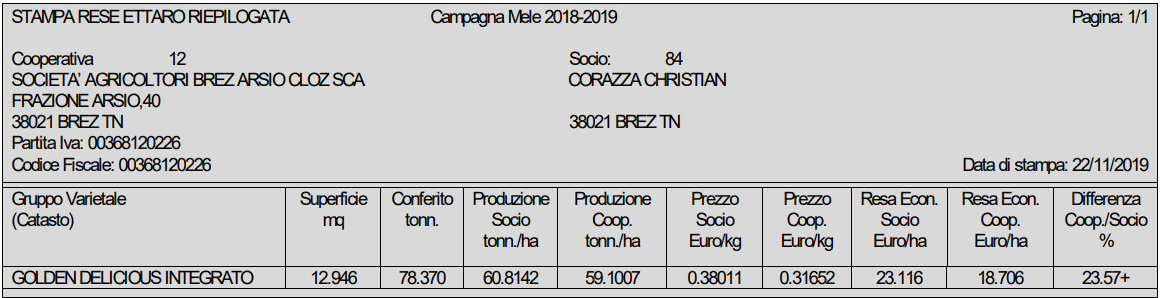
For the 2018 harvest, Corazza Christian Farm received payments considerably higher than those received by other farms.
Following the use of BioAksxter®, the farm achieved yields per hectare above the cooperative average, despite damage estimated at 40% by assessors following a severe hailstorm. The greatest benefits were observed in fruit quality, resulting in higher payments: an additional 20% thanks to the quality recognised by the cooperative in terms of the colour and size of the apples supplied.
Revenue from payments for Golden Delicious apples amounted to €23,116.00/ha, exceeding the average received by the cooperative's members by €4,410.00/ha (+23.57%).
Corazza Christian Farm is family-run and is representative of most farms in Val di Non, which have a distinctive economic structure. One of their strengths is that many operations, such as pruning, establishing new orchards, mowing, weed control, crop protection treatments and maintenance, are carried out directly by the owners themselves. Despite the relatively small areas cultivated, an adequate range of machinery is still essential, particularly given the steep slopes of many plots.
An economic analysis was conducted using the data provided, comparing Corazza Christian Farm with other fruit-growing farms that do not use BioAksxter®. The analysis shows that, particularly in years such as 2018, the use of BioAksxter® enables considerably higher profitability.
| COST ITEMS | WITH BIOAKSXTER® €/HA | WITHOUT BIOAKSXTER® €/HA |
| Crop protection and fertilisation | 4,000.00 | 3,500.00 |
| Irrigation | 1,500.00 | 1,500.00 |
| Hand thinning | 1,500.00 | 1,500.00 |
| Multi-peril crop insurance | 2,000.00 | 2,000.00 |
| Harvesting | 3,000.00 | 3,000.00 |
| Machinery depreciation | 4,600.00 | 4,600.00 |
| Orchard depreciation | 1,700.00 | 1,700.00 |
| Diesel and consumables | 1,000.00 | 1,000.00 |
| TOTAL COSTS AND EXPENSES | 19,300.00 | 18,800.00 |
| REVENUE | 23,116.00 | 18,706.00 |
| PROFIT WITH BIOAKSXTER® | 3,816.00 | −94.00 |
*Any insurance compensation for weather-related damage should be added to the profit figure.
Other important benefits that can further increase profits should not be overlooked. The most significant are:
-
Reduction in young apple tree mortality
Replacing young trees affected by mortality is a widespread problem involving direct costs for purchasing replacement trees, as well as lost revenue due to missed harvests. Reducing and permanently resolving this problem offers clear economic benefits, which in many cases are sufficient on their own to fully offset the cost of using BioAksxter®. -
Resolution of soil fatigue
The use of BioAksxter® on fatigued soils, through progressive soil regeneration, makes it possible to maintain optimal yields over the years, thereby maximising revenue. -
Earlier onset of production
Using BioAksxter® in newly established orchards makes it possible to bring production forward by at least one year, achieving higher yields and therefore greater revenue. This enables growers to recover their investment in establishing a new orchard sooner. -
Increased orchard longevity
It has been demonstrated that using BioAksxter® in ageing orchards restores their productivity and maintains it over time, making it possible to postpone orchard removal and subsequent replanting. This considerably improves economic returns through lower depreciation costs.
The economic performance of a farming business depends on a wide range of factors. Every grower can increase earnings by optimising expenditure and maximising revenue. Examples of factors influencing costs include the choice of varieties, planting distances, the number of hours required for hand thinning and the choice of machinery. Although these variables affect economic performance, none can make as great a difference from a technical and economic perspective as BioAksxter®.
The use of BioAksxter® contributes significantly to increased profits: according to the figures, the initial expenditure accounts for 2.6% of costs, while revenue increases by 23.5%. This represents an excellent source of income in normal years and can make the difference between producing at a loss and earning a profit in particularly challenging years, such as the one examined.
Data source: Andrea Turri, agricultural and oenological technician.


