Claudio, greenhouse vegetable grower
Castelli Claudio Farm, Cavallino Treporti (Venice, Italy)
A horticultural farm specialising in the greenhouse and open-field production of cucumbers, tomatoes, basil, celery and spinach for the wholesale market.
The farm, which had been committed to reducing the use of synthetic chemicals for many years, began using BioAksxter® in April 2008 with the aim of improving crop yields and quality, as well as overall plant health.
The main problem was nematode infestation, favoured by the highly sandy soil, alongside Fusarium, fungal diseases and collar diseases in soil-grown crops, and downy mildew and Sclerotinia in soilless crops.
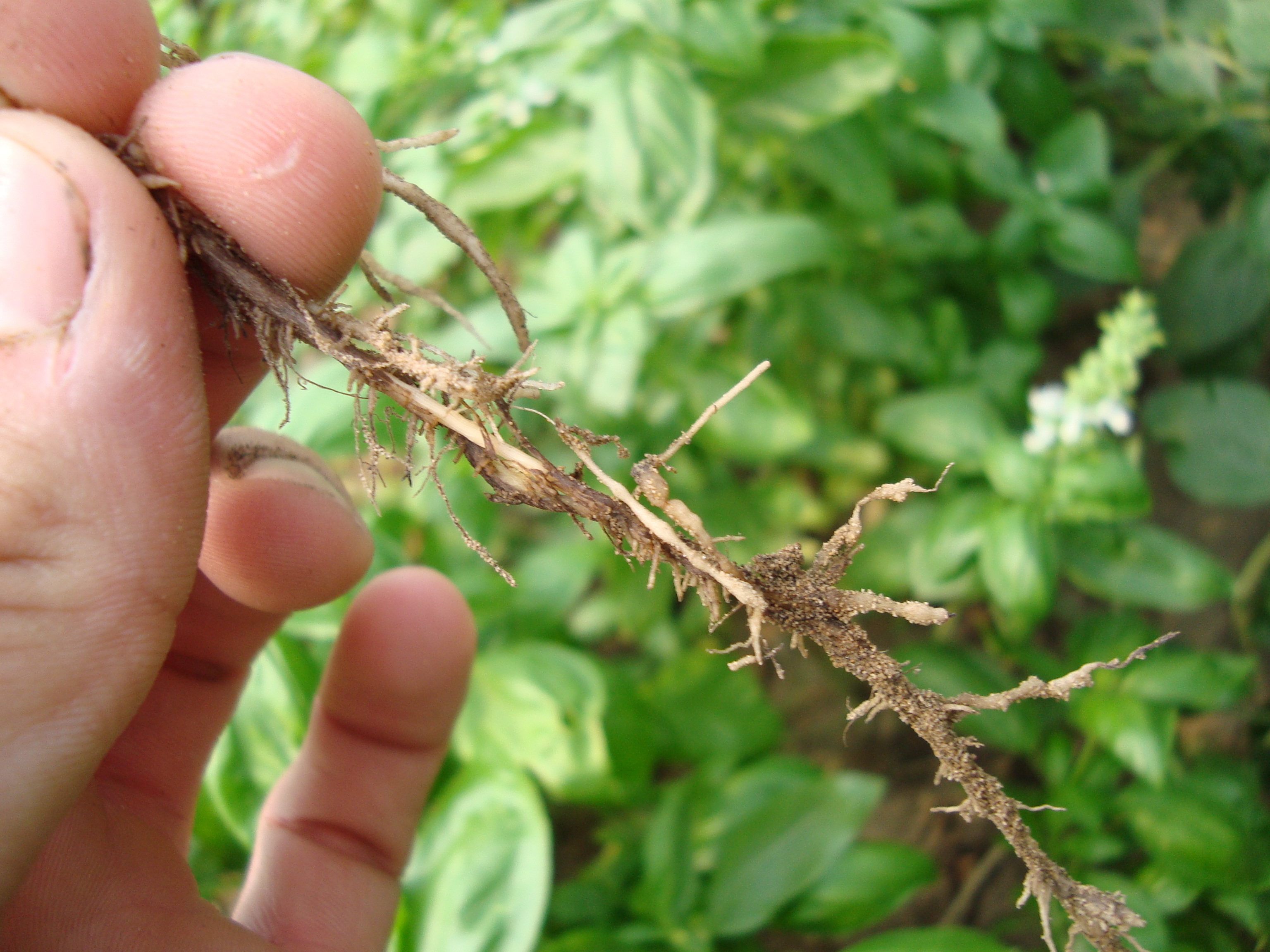
Basil root affected by Fusarium and nematodes.

Nematode infestation in a young cucumber plant.

Cucumber leaf desiccated following a severe fungal infection.
During the first year of using BioAksxter®, the results achieved included greater resistance to downy mildew and Sclerotinia in soilless cucumber crops, as well as the recovery of a tomato crop following a severe fungal infection affecting the plant collar, with a significant increase in yields and the length of the harvesting period.

Cucumber crop at the end of its growing cycle, 5 September 2008.

Tomato plant affected by collar diseases, 3 July 2008.

Tomato crop, 5 September 2008.

Tomato crop, 10 October 2008.
In basil cultivation, a reduction in collar diseases and suspected Fusarium was achieved, together with increased leaf thickness and size.

Basil crop in 2009, halfway through the growing cycle.

Basil crop in 2009, at the end of the growing cycle.
In spinach cultivation, yields increased and fungal infections decreased, while no significant nematode infestations occurred in celery crops.

Spinach grown with BioAksxter®.

Celery crop, 24 April 2009.

Celery crop, 8 June 2009.
During the second year of using BioAksxter®, a substantial reduction in nematode damage was achieved in most greenhouses planted with cucumbers, together with increased yields from the spring transplanting and a 10-day extension of the harvesting period for the summer transplanting.

Greenhouse cucumber crop, 8 June 2009.

Greenhouse cucumber crop, 27 August 2009.
During the third year of treatment with BioAksxter®, maximum productivity was achieved in cucumber cultivation, with an average yield of 140–180 grams per plant per day throughout the harvesting period, alongside a further reduction in nematode damage.
In spinach production, a further reduction in the incidence of fungal diseases was observed despite adverse weather conditions.

Soilless cucumber crop, 15 April 2010.

Soilless cucumber crop, 15 April 2010.

Cucumber roots after 50 days of harvesting.

Cucumber crop after 50 days of harvesting.
In 2010, the farm joined the initiative “Ask for Fruit and Vegetables Grown with BioAksxter®” to further enhance the value of its agricultural produce.


