Giuseppe, fruit and vegetable grower
Bovi Giuseppe Farm, Caldiero (Verona, Italy)
A fruit and vegetable farm specialising in greenhouse and open-field cultivation of strawberries, aubergines, melons, tomatoes, head lettuce, cherries and apples for the wholesale fruit and vegetable market.
In September 2007, the farm, which had specialised in producing high-quality fruit and vegetables for many years, began using BioAksxter® with the aim of improving head lettuce yields.
Further objectives were subsequently added: addressing the increasing agronomic problems associated with changing climatic conditions and intensive soil cultivation, which had led to Fusarium, melon plant desiccation, widespread browning of strawberry growing points and the resulting deformation of leaves and fruits, cherry tree mortality in orchards aged 3 and 15 years, and alternate bearing in apple trees.
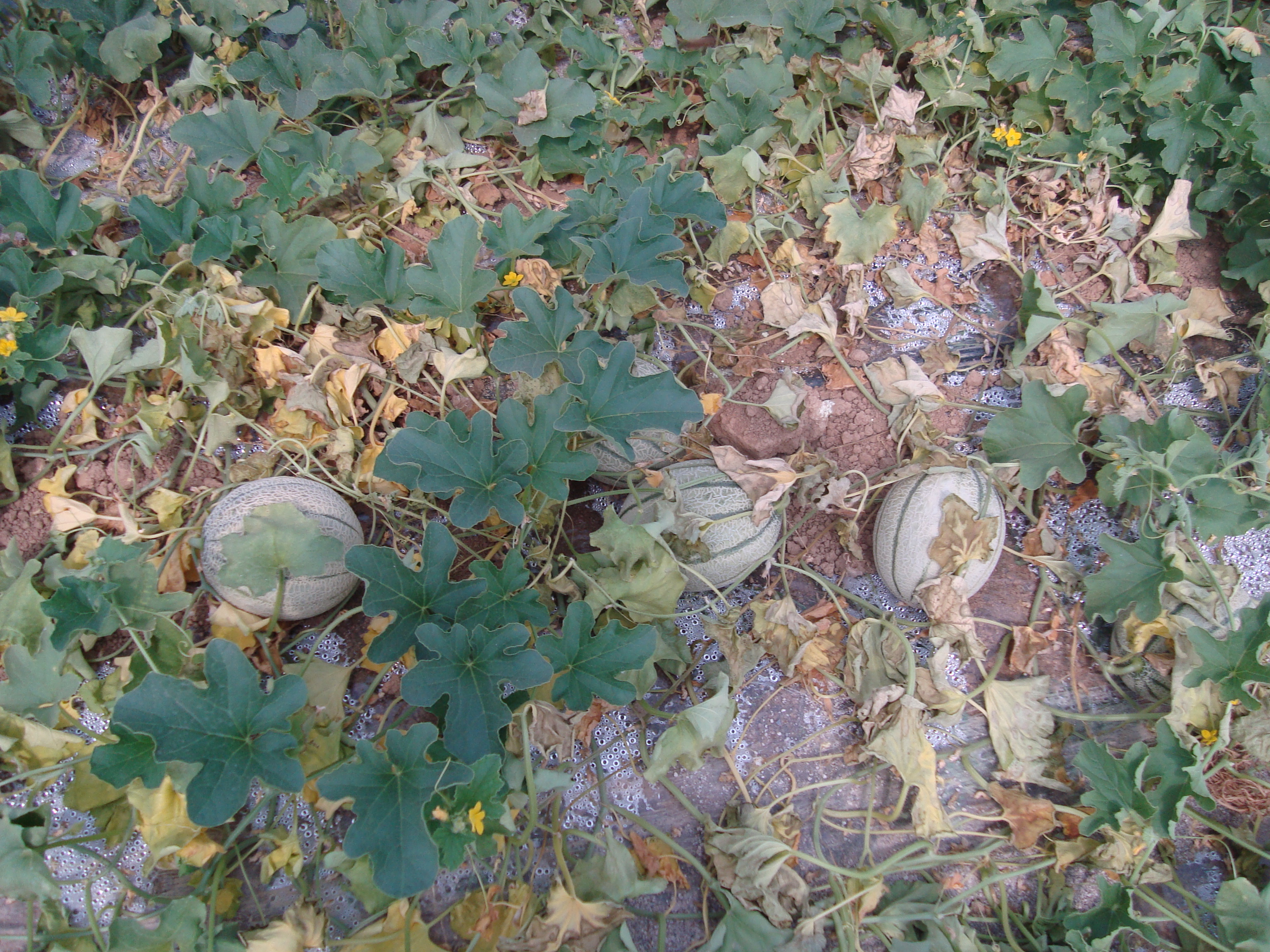
Melon plant affected by desiccation.

Strawberry crop showing browning of vegetative and floral growing points, resulting in fruit deformation.

Fuji apple tree affected by alternate bearing, showing a low fruit load in a low-yielding year.
During the first year of treatment with BioAksxter®, the following results were achieved:
- Improved lettuce plant health, with lower rejection rates and a reduction in rots.
- A reduction in Fusarium and melon plant desiccation, with yields reaching peaks of 360 quintals per hectare in early-maturing varieties and excellent quality throughout the harvesting period.

December 2007. Winter head lettuce crop showing high uniformity after three months of treatment with BioAksxter®.

December 2007. Winter head lettuce crop after three months of treatment with BioAksxter®, showing excellent plant health.

June 2008. Melon crop during the first year of treatment with BioAksxter®, characterised by the absence of plant desiccation.

June 2008. Early-maturing melon variety during the first year of treatment with BioAksxter®, showing good fruit size and fruit set.
- Normal strawberry yields were maintained in a year generally characterised by severe production losses.
- Tomato and aubergine yields increased compared with the previous year, with elongated tomato varieties reaching 700 quintals per hectare.

May 2008. Ever-bearing strawberry crop during the first year of treatment with BioAksxter®, characterised by vigorous vegetative growth even after two weeks of harvesting.

May 2008. Ever-bearing strawberry crop during the first year of treatment with BioAksxter®, showing particularly large fruit size after two weeks of harvesting.

July 2008. Elongated tomato crop during the first year of treatment with BioAksxter®, characterised by abundant flowering and fruit set.

August 2008. Highly productive elongated tomato crop during the first year of treatment with BioAksxter®.

August 2008. High-quality aubergines during the first year of treatment with BioAksxter®.
- In a year of high fruit load, apples were characterised by large fruit size and low rejection rates, both at harvest and during processing. Even after several months of cold storage, the proportion of fruit affected by flesh browning and bitter pit was minimal and lower than in previous years, whereas rejection rates in the same fruit-growing area reached 30%.

Golden Delicious apple orchard during the first year of treatment with BioAksxter®, characterised by high fruit load and large fruit size.

Golden Delicious apple tree during the first year of treatment with BioAksxter®, showing excellent fruit quality.

Fuji apple tree affected by alternate bearing, during the first year of treatment with BioAksxter®, in a year of high fruit load.
After two years of treatment with BioAksxter®, vegetable crop yields, particularly those of melons, remained high even under conditions unfavourable to fruit set.
No deformation of strawberry growing points was observed, and harvesting of ever-bearing varieties continued throughout much of July, unlike previous years when harvesting had ended in June.
Strawberry firmness, sweetness and storage life remained consistently high, while yields reached 330 quintals per hectare.

Strawberry crop after two years of treatment with BioAksxter®.

Strawberry crop after two years of treatment with BioAksxter®, showing the absence of browning and deformation of vegetative growing points.
In young cherry orchards, only one tree was affected by mortality.
Fruit size remained consistently large, even under conditions of high fruit load.

Young cherry orchard previously affected by tree mortality, treated with BioAksxter®.

Large-sized cherries from a young orchard treated with BioAksxter®.

Young cherry orchard treated with BioAksxter®, characterised by high productivity.

Approximately 15-year-old cherry orchard treated with BioAksxter® for two years, showing high fruit load and large fruit size.
Regarding apple production, despite the expected low-yielding year in the alternate-bearing cycle, yields remained in line with those of the previous year. In particular, Fuji apple production, which had been only 150 quintals per hectare two years earlier, reached 340 quintals per hectare, with large fruit size and intense colouration.

Fuji apple tree showing a marked reduction in alternate bearing after two years of treatment with BioAksxter®.

Morgen Dallago apple tree after two years of treatment with BioAksxter®.

Young Royal Gala apple orchard after two years of treatment with BioAksxter®.
In 2010, Bovi Giuseppe Farm decided to further enhance the value of its agricultural produce by joining the initiative “Ask for Fruit and Vegetables Grown with BioAksxter®”.


