
Soil Desertification: a journey through the processes that dry out the land
Soil does not become a desert overnight. The land has a memory. It retains the memory of the water it has received, the roots that have grown through it, the matter it has transformed, and even the consequences of what we have taken away from it.
Today, an increasing proportion of the planet's soils are losing their capacity to support ecosystems and agricultural production. Soil desertification is one of the most extreme signs of this transformation, revealing a crisis that concerns not only distant, arid regions but also the way we are changing the land on which we depend.
Understanding soil desertification means looking beyond the familiar image of dry, cracked earth. It means exploring the processes that precede that image, understanding their causes, and examining how their interaction can drive productive land towards increasingly critical conditions for humanity. This journey begins beneath the surface.
Distinguishing soil desertification from aridity, drought, and land degradation
Amid the abundance of data and statistics circulating online, how often is desertification confused with other phenomena, giving rise to misleading information?
Desertification, aridity, drought, and land degradation describe distinct phenomena, although they can interact and contribute to the transformation of the same environment.
According to the United Nations Convention to Combat Desertification (UNCCD), desertification is land degradation in arid, semi-arid, and dry sub-humid areas resulting from various factors, including climatic variations and human activities. It does not refer to the formation or expansion of a desert, since a desert is a dynamic ecosystem with extraordinary biodiversity, highly adapted to surviving extreme conditions. A key indicator of desertification is the loss of microorganisms, the “disappearance” of the soil microbiome (bacteria, fungi, and protozoa), in other words, the microscopic life within the soil.
Aridity, by contrast, is a persistent climatic condition in which water availability is limited relative to the evaporative demand of the atmosphere. Drought is a temporary phenomenon associated with an abnormally dry period that lasts long enough to cause a significant hydrological imbalance. An area can therefore be naturally arid without being affected by desertification, and it can experience drought without undergoing desertification.
Land degradation is more like the deterioration of a building's foundations: the structure is still standing, but it is losing the properties that enable it to support everything resting upon it. In soil, this means progressively disrupting all the essential balances that allow it to function.
These distinctions are not merely terminological. They help explain why desertification cannot be attributed to a single cause or equated solely with water scarcity.
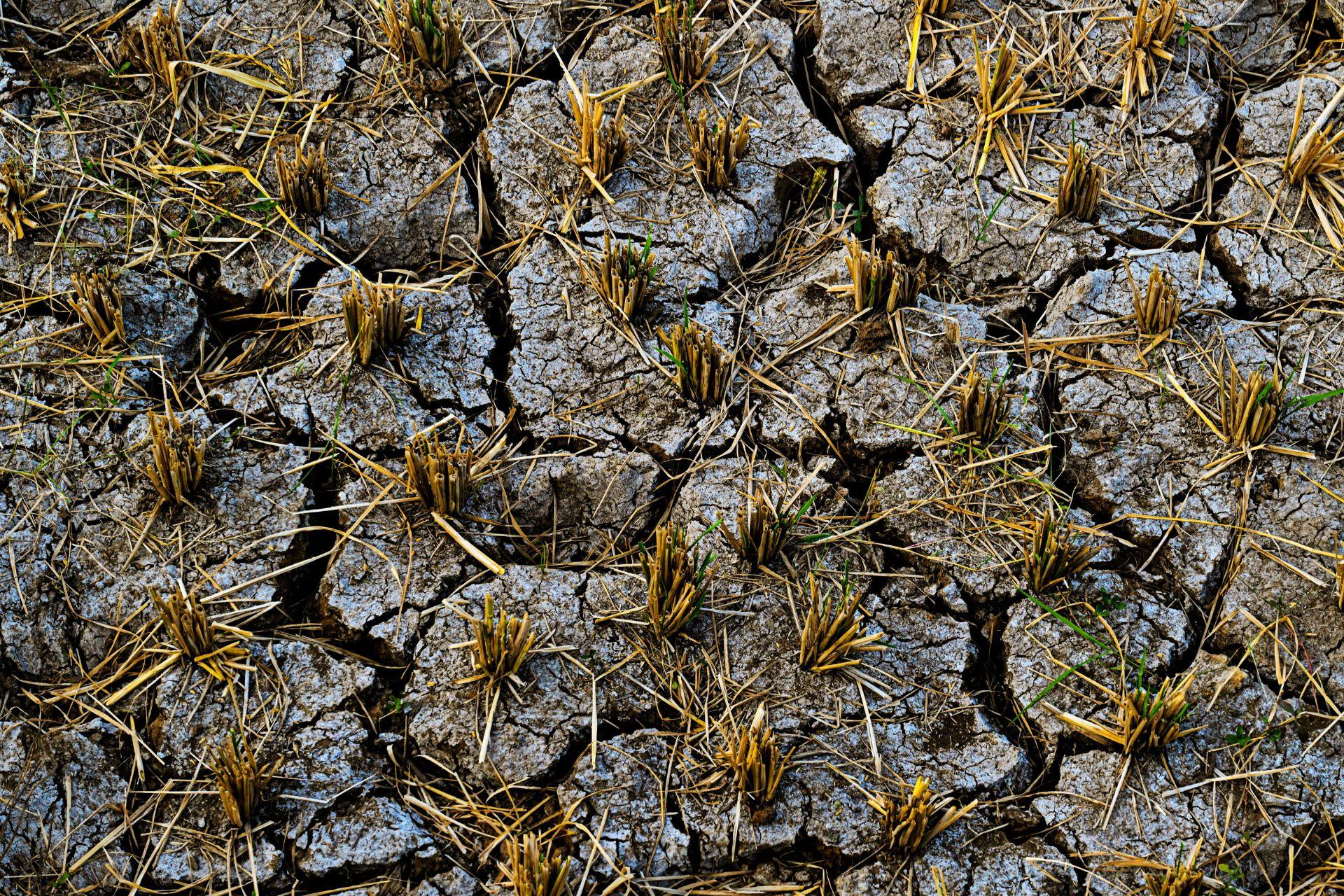
Causes of soil desertification
The causes of soil desertification should not be examined in isolation. Instead, they work like interconnected gears: a change in one condition can trigger another, setting off a chain of effects that makes the land progressively more vulnerable. It is through this chain of interconnected processes that desertification takes shape.
Human pressures and resource use
Can soil produce indefinitely? The answer is written in the fields long before it appears in the statistics: when what is taken from the system consistently exceeds its capacity to regenerate, its balances begin to shift.
The human-induced causes of soil desertification include all sources of pollution, intensive land use, overgrazing, deforestation, and inadequate water resource management.
For farmers, these processes are not abstract concepts. They can manifest as soil that becomes compacted more easily, land that remains bare and exposed for extended periods, or water that struggles to infiltrate the soil and instead runs off, carrying soil particles with it. Different signs, yet ones that can reinforce one another.
At the chemical and biological levels, nutrient availability, microbial activity, and the processes involved in organic matter transformation are altered, progressively compromising soil functionality.
The point, therefore, is not to hold agriculture responsible for desertification, but to question the intensity with which we use resources in relation to their capacity to regenerate. A field is a productive system, but it remains, first and foremost, a natural system: when we demand more from it than it can replenish, we slowly begin to deplete the very capital on which production itself depends.
But what happens to the soil does not necessarily begin or end in the soil. Soil, water, and the atmosphere are in constant interaction: harmful substances and contaminants are carried through the air, settle on the soil, move through water, and reach organisms and ecosystems. Trying to protect a single environmental medium while ignoring the others would be rather like trying to preserve one room while the rest of the house collapses.
Climatic and environmental factors
How long can soil withstand changes in the conditions under which it formed and established its equilibrium?
The issue is not simply rising temperatures or declining rainfall. Soil desertification processes are also influenced by changes in the overall climate regime: shifts in the length of seasons, rainfall concentrated into shorter periods, more persistent spells of hot weather, an increase in the frequency or intensity of extreme events, and changes in wind patterns.
Indeed, soil carries a kind of “climatic imprint”: its structure, vegetation, biological communities, and resource availability have developed over time partly in response to local environmental conditions. When these conditions change rapidly or become more extreme, the gap widens between what the system has adapted to and what it must now face.
Evapotranspiration also plays an important role: it is the loss of water from the soil through evaporation and from plants through transpiration. When the atmosphere's evaporative demand increases and rainfall is insufficient to offset it, the water imbalance across the landscape intensifies, contributing to conditions that favour soil desertification processes.
Wind also plays an important role, particularly when it encounters dry surfaces with sparse vegetation or areas that are already vulnerable. It can remove and transport the finest soil particles, contributing to the loss of topsoil.
Climate, therefore, does not cause soil desertification on its own, but accelerates the processes involved and progressively reduces the land's capacity to respond.
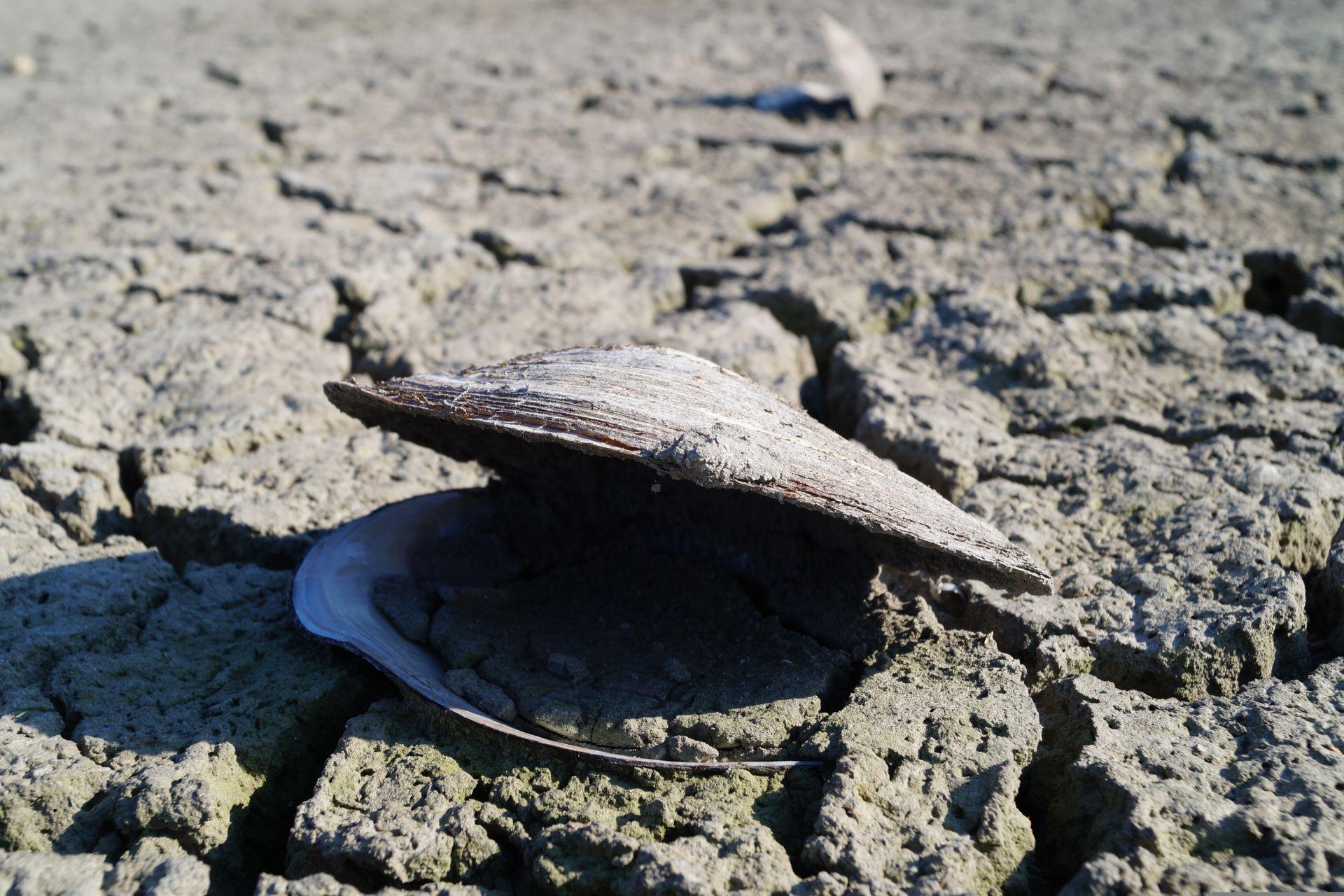
Desertification in Earth's geological history: natural processes and current accelerations
Planet Earth is not a static system. Throughout geological eras, the distribution of continents, tectonic movements, atmospheric circulation, temperatures, and precipitation patterns have profoundly reshaped terrestrial environments. Regions covered by vegetation today experienced entirely different conditions in the distant past.
Evidence of this can be found in South America. Between the Late Jurassic and Early Cretaceous geological periods, a vast desert environment left behind deposits of wind-blown sand that we now recognise in the sandstones of the Botucatu Formation, part of the geological history of the Guarani Aquifer System. The rock thus preserves the traces of a vanished landscape.
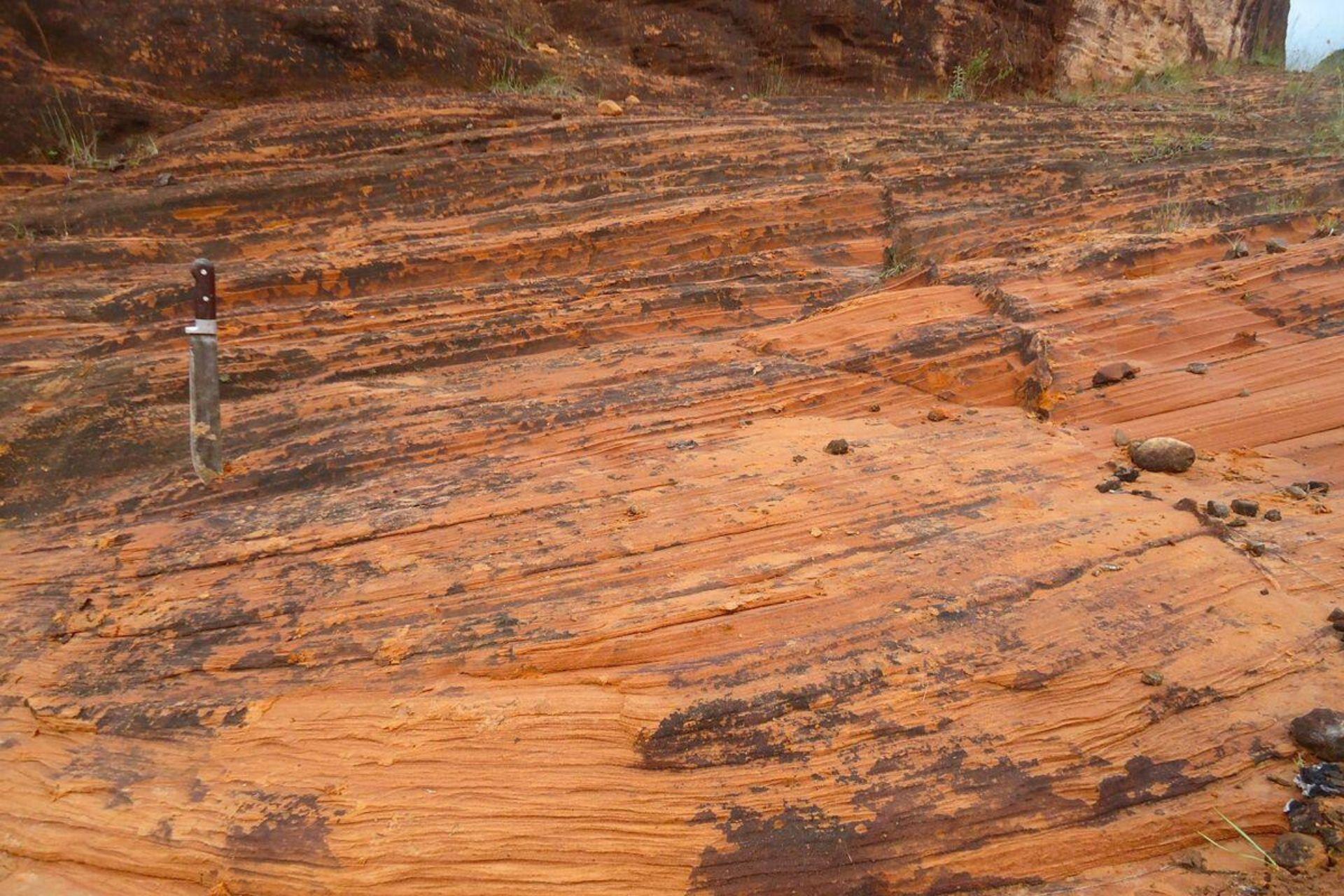
Sandstone from the Botucatu Formation in Brazil: these sedimentary rocks preserve evidence of a vast desert environment that covered part of South America millions of years ago. Photo: A. S. Rosa, Wikimedia Commons (CC0 1.0).
But if terrestrial environments have always changed, what distinguishes the natural transformations of the past from the desertification processes we observe today?
The answer requires us to consider the causes, intensity, and speed of change. Geological and climatic transformations can unfold over widely varying timescales, from relatively rapid events to processes spanning thousands or millions of years. Today, these natural variations are compounded by pollution, which can alter environmental balances over extremely short periods.
Desertification, therefore, is not simply an inevitable stage in the planet's evolution. The fact that geological changes have always occurred does not justify the drastic changes we are witnessing today, driven by causes and unfolding over timescales different from those of the past.
A concrete example of how interconnected the planet's equilibria are can be found in glaciers. When snow falls, it accumulates and, over time, the weight of the upper layers compresses those beneath, gradually transforming them into ice. This is a natural process: the thickness decreases, but this does not necessarily mean that water has been lost.
The problem arises when, year after year, more ice melts than can form. Glaciers thus enter a state of negative mass balance: they lose more ice than they accumulate and progressively thin and retreat.
Meltwater from land-based glaciers reaches the oceans and contributes to sea-level rise and the thermal expansion of seawater as it warms. But the consequences do not end there: when large amounts of ice disappear from a region, the weight exerted on the Earth's crust also decreases, allowing it to slowly rise. This phenomenon is known as glacial isostatic adjustment, further demonstrating how closely climate, water, and the planet's structure are interconnected.
But there is another consequence of glacier retreat, one that is less immediately apparent and particularly important for soil desertification.
In some arid regions of Central Asia, for example, mountains act as vast water reservoirs for areas located hundreds of kilometres away. Snow and glaciers feed rivers on which natural vegetation, oases, and numerous agricultural activities depend. The problem arises when these reserves begin to shrink: initially, increased melting may even boost river flows, but as the ice is progressively depleted, the water reserves available for release in subsequent years diminish.
This is a particularly delicate mechanism because the greater availability of water today “conceals” the depletion of reserves that will be needed tomorrow.
A study published in 2025 in the scientific journal CATENA, focusing on the drylands of Central Asia over the period 1982–2020, identified desertification processes across approximately 14.8% of the area studied. Among the variables examined, Snow Water Equivalent (SWE), which represents the amount of water contained in the snowpack, emerged as one of the most significant natural factors in the analysis of the observed dynamics.
Another study, published in 2026 in Water Resources Research and focusing on the glaciers of the Tien Shan, examined how river flows fed by glacial melt are changing. The simulations show how an initial increase in water availability may be followed by a decline in river flows, with consequences for water supplies during the irrigation season.
This is where the link to desertification becomes tangible.
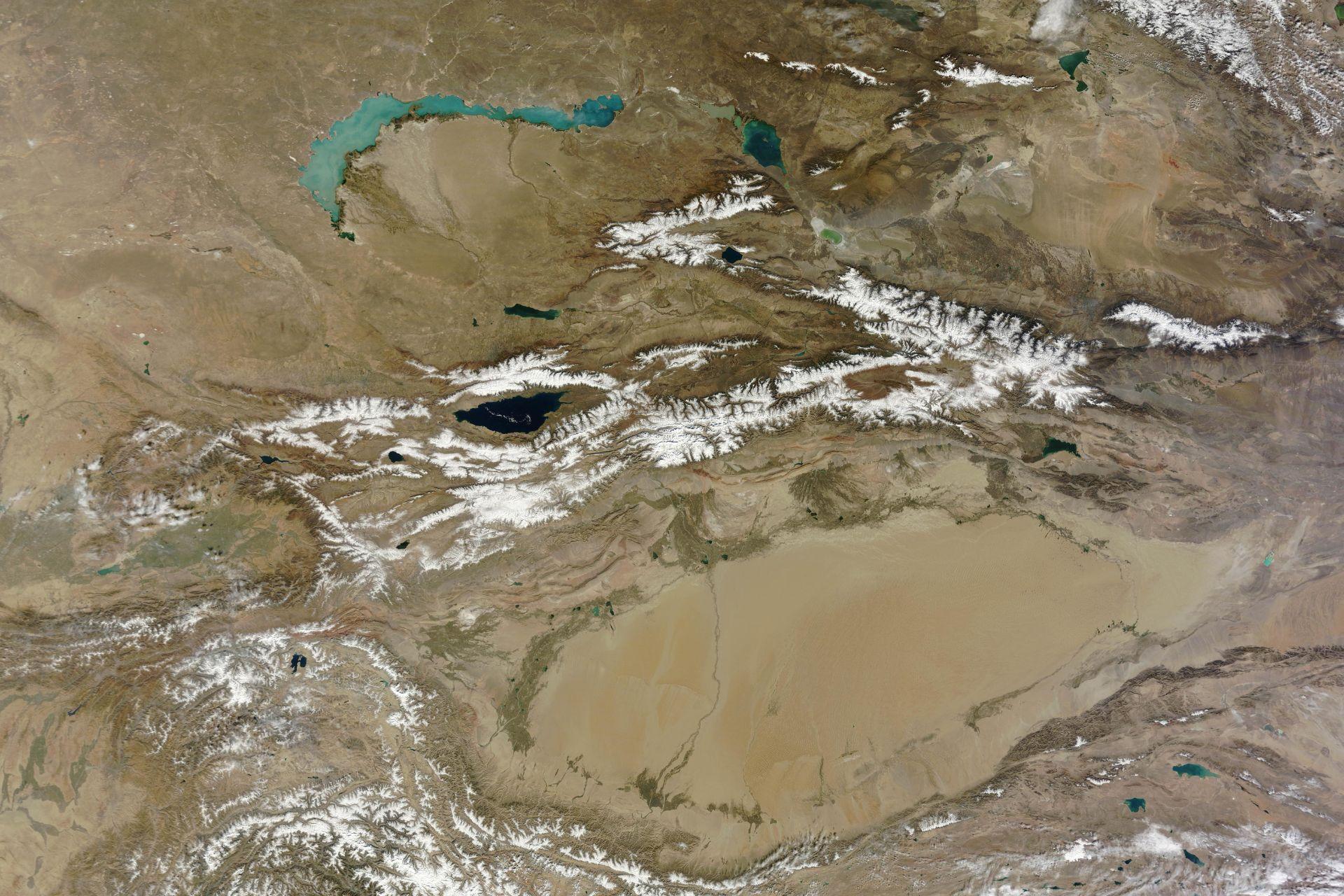
The Tien Shan mountain range seen from space: the contrast between the snow-covered mountains and the vast surrounding arid regions highlights the importance of snow and ice reserves for water availability in Central Asia. Source: NASA Earth Observatory.
The alteration of the soil's physical, chemical, biological, and magnetic equilibria
There is one aspect that is not taken into consideration in the scientific literature, even when discussing desertification: the magnetic component.
In Alessandro Mendini's research, the magnetic component is regarded as preceding the physical, chemical, and biological equilibria that contribute to the functioning of living systems.
Matter is not merely what we can observe in its physical structure; it also has an energetic dimension and is in constant interaction with its environment.
From this perspective, even the desert takes on a different meaning. A desert is not an energetically inert ecosystem: it receives intense solar radiation as well as other forms of energy, some of which are reflected and some absorbed. The absorbed energy is released back into the environment, including in the form of thermal radiation. Indeed, desert sand can reach temperatures of 60–70°C during the day. The marked temperature difference between day and night makes this alternation between energy absorption, heating, and release particularly evident.
Building on this phenomenon, Mendini's research introduces a further concept: the desert functions as a system that channels energy (sand consists largely of silicon and salt), and desertification represents a compensatory response to a disruption of the Earth's energy-magnetic equilibrium, a kind of “discharge window” into space through which the system would help dissipate excess energy accumulated in matter.
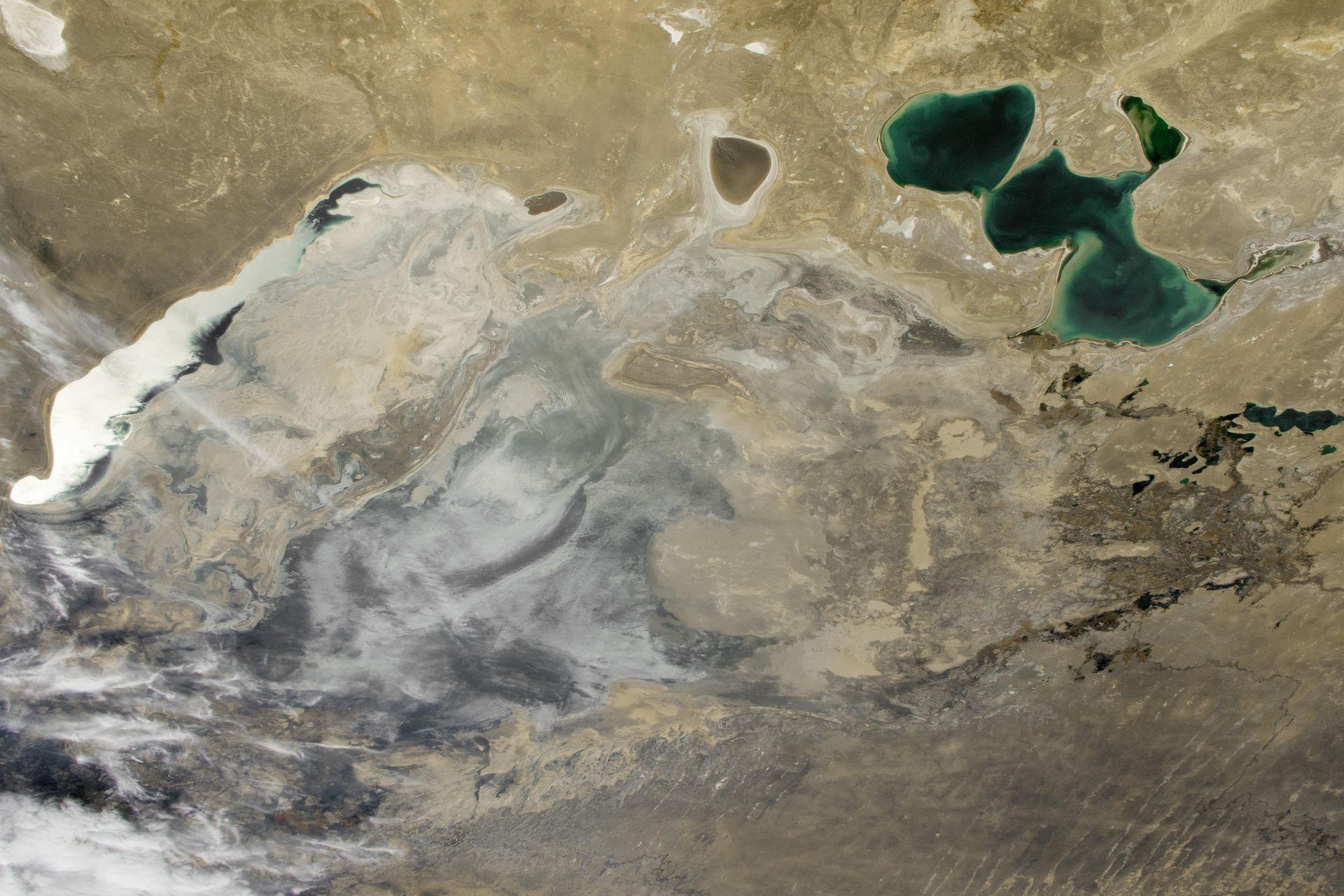
The gradual drying up of the Aral Sea (Kazakhstan–Uzbekistan) has led to the formation of a new desert, the Aralkum. Source: NASA Earth Observatory.
According to researcher Alessandro Mendini, therefore, desertification would not merely be the visible result of the interaction between human pressures and climatic and environmental conditions, but rather the surface manifestation of a deeper disruption of the Earth's magnetic and energetic equilibrium.
Soil, therefore, does not function as a collection of independent compartments. It functions through interconnections. This vision radically broadens our perspective on the phenomenon: from the soil to the Earth, and from the Earth back to the soil.
Soil Desertification and the loss of agricultural productivity
What happens to agricultural productivity when an area is affected by desertification processes?
Quantifying desertification on a global scale is not straightforward. For this reason, the available data must always be interpreted in light of the period examined and the methodology used to obtain them.
An important reference comes from the IPCC (Intergovernmental Panel on Climate Change): according to the assessment presented in its Sixth Assessment Report, between 1982 and 2015, the combined effects of unsustainable land use and climate change led to desertification across approximately 6% of the planet's drylands.
This percentage may seem relatively small until we consider the scale it represents. Drylands cover a vast proportion of the world's land surface and support populations, ecosystems, crops, and pastoral systems. Desertification in these areas does not simply mean observing land becoming progressively drier: it means disrupting the processes on which their capacity to produce biomass also depends. And this is where the issue becomes an agronomic one.
The loss of productivity, in fact, should not be understood solely as an immediate decline in yields. In agriculture, what also matters is the stability with which production can be sustained over time. Two soils may deliver similar results today, yet be in profoundly different conditions when it comes to their ability to sustain production in the years ahead.
For this reason, a decline in productivity, considered in isolation, tells us little about the trajectory of a soil: it may depend on a season's weather conditions, the crop grown, management practices, or numerous other factors. It is the persistence of change that deserves attention. And this is where the issue becomes particularly critical for agriculture. The question, then, is: “When soil produces less, are we witnessing a poor growing season or the gradual decline of its capacity to produce?”
It is this distinction that makes desertification an agronomic issue even before it becomes a landscape issue.
Counteracting desertification means preserving the functionality of the soil-plant system
Counteracting desertification means addressing its causes, rather than simply trying to remedy its consequences. Where do we begin?
Let's examine the solutions proposed by international organisations.
The United Nations Convention to Combat Desertification (UNCCD) promotes “integrated strategies for sustainable land management, water resource conservation, and vegetation restoration”. These are important measures, but their effectiveness depends on how they are implemented and the environmental conditions in which they are applied.
Is planting trees, for example, enough to halt desertification? No. Vegetation cover protects the soil from direct exposure to sunlight, wind, and rainfall, but introducing new plants without considering available water resources, the species selected, and the conditions necessary for their survival can render even an ambitious revegetation project ineffective.
And is harvesting rainwater sufficient? Rainwater management should be an integral part of land-use planning worldwide. Collecting water does not solve everything: we need to understand whether the soil is capable of absorbing it, retaining it, and making it available to vegetation.
The question then becomes: can we encourage plant growth even where the substrate already appears particularly inhospitable?
This question finds an interesting point of reference in a trial with BioAksxter® conducted in 2001 on wheat, using desert sand as a substrate. The comparison between seeds treated with BioAksxter® and untreated seeds documented substantial differences in germination and early development in favour of the treated seeds. Images and details of the trial conditions are presented in the in-depth article on dryland farming.
Naturally, observing germination in desert sand is not equivalent to demonstrating the restoration of desertified land, but it opens up a research perspective on the possibility of encouraging plant growth and development even under severely limiting conditions, such as those found in deserts.
Perhaps this is the question with which we should conclude our journey: how much can we truly understand about desertification if we continue to observe only its visible effects, overlooking the effects of magnetic fields studied by researcher Alessandro Mendini?
Counteracting desertification means understanding the equilibria that make life possible and restoring them. This is why the BioAksxter® formulations developed by Mendini represent a tangible approach.


