Tomato Downy Mildew: predisposing factors, symptoms and prevention strategies
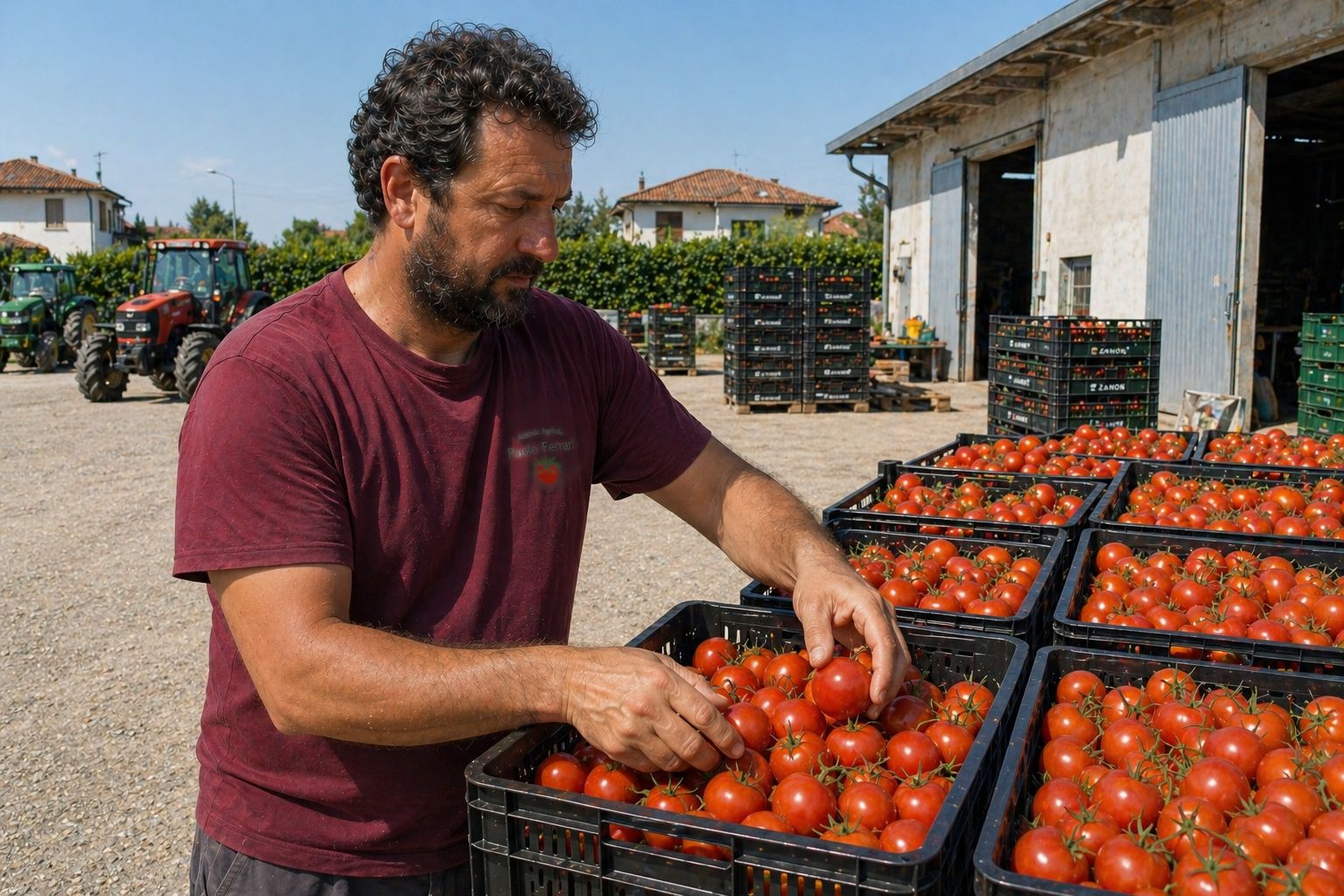
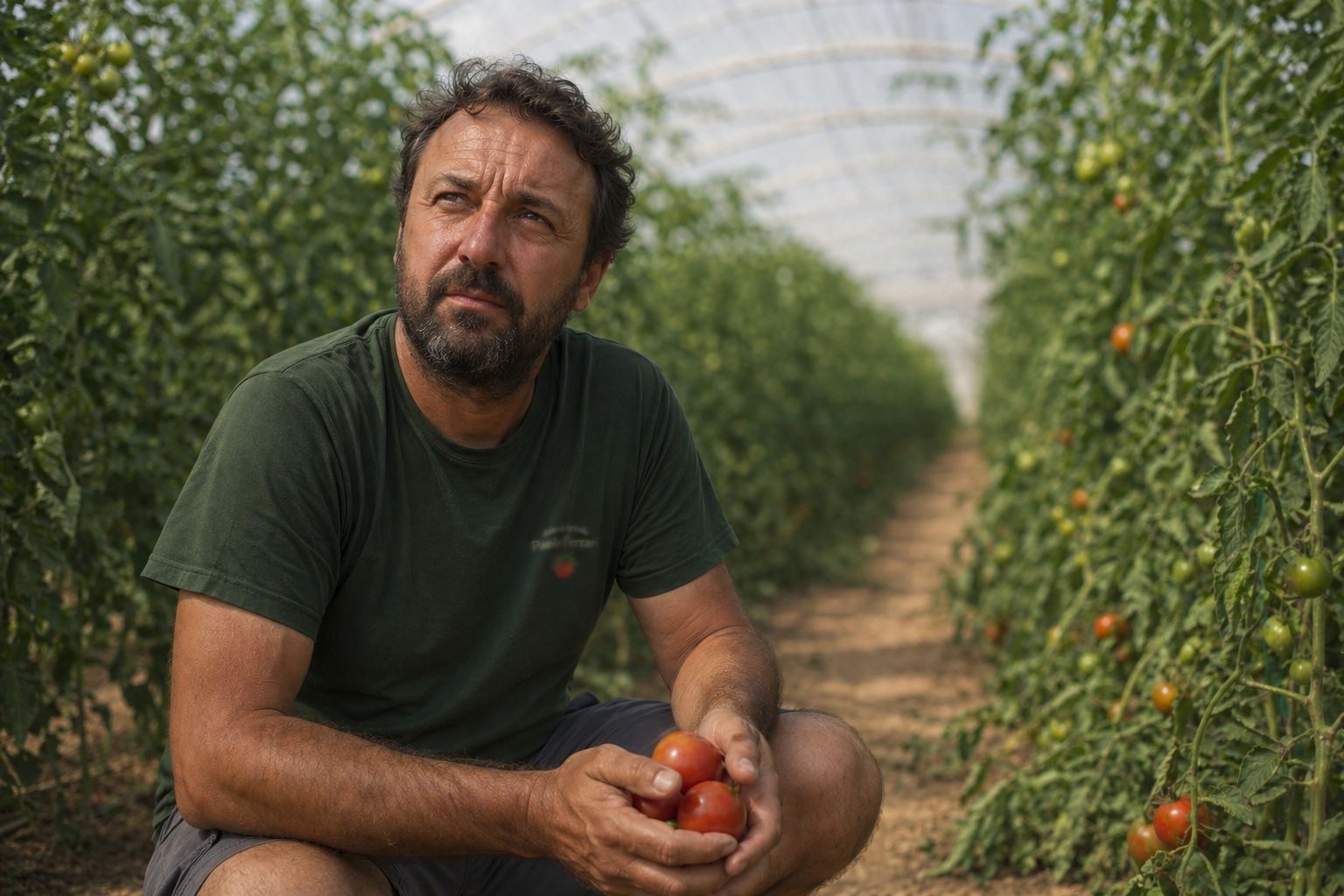
Farmer Paolo enters the greenhouse for the usual inspection of the tomato crop and notices, particularly on the basal leaves, some yellowish translucent spots that were not present in previous days. In agriculture, signs like these do not go unnoticed: they are not merely the first warning signal of a phytosanitary issue that may rapidly evolve. Anyone who grows tomatoes knows this moment well. It is the moment no farmer would ever wish to face: tomato downy mildew, one of the most aggressive and feared plant diseases.
Its danger lies not only in the speed with which it can spread, but also in its ability to compromise entire productions within just a few days when predisposing conditions occur.
Paolo leaves the greenhouse, thoughtful and somewhat conflicted. Then he bursts out: “Damn Eve!”. He thinks back to the 1980s, when he was a boy helping his father run the family farm. Downy mildew control was not a major concern at the time. Why? What has changed over these forty years? His mind travels back in time: there were fewer synthetic molecules, seedlings supplied by nurseries were stronger, there were no hybrid varieties (F1), fewer consecutive crop cycles, greater biodiversity and, above all, less pollution, both agricultural and environmental. And today, what does he find? A compromised system generating cascading problems. Tomato downy mildew is only one of the many issues affecting modern agriculture, an agriculture that has now become fragile.
Understanding how tomato downy mildew develops, how to recognise it and, above all, how to prevent it is the first step toward concretely reducing its impact in the field.
What is Tomato Downy Mildew
Tomato downy mildew is a biotic plant disease caused by the oomycete Phytophthora infestans, a pathogenic microorganism responsible for one of the most damaging diseases affecting tomato crops worldwide.
Although it is often generically associated with fungal diseases of tomato, downy mildew is not caused by a true fungus, but rather by a fungus-like organism belonging to the oomycete group, characterised by high aggressiveness and rapid spread under favourable environmental conditions.
The danger of this disease lies in its ability to rapidly affect all aerial parts of the plant (leaves, stems, petioles and fruits), compromising the crop’s photosynthetic functionality and leading, in the most severe cases, to extremely significant yield losses.
It must also be considered that pathogens are in continuous evolution and mutation. This is because they must adapt to constantly changing environmental conditions. Therefore, the downy mildew of forty years ago is not the same as the downy mildew of today. Through mutation, variants survive more effectively, develop resistance to plant protection products and become dominant.
For this reason, downy mildew is considered one of the major phytosanitary challenges in professional tomato management, both under protected cultivation and in open-field production.
When, why and how Tomato Downy Mildew develops
Understanding when, why and how tomato downy mildew develops means understanding the predisposing causes behind the onset of the disease.
First of all, alongside the dynamics of modern agriculture, there is a deeper transformation linked to the evolution of cropping systems: the contamination of the agroecosystem, which promotes climate change and the proliferation of fungi, bacteria and viruses.
From an agronomic perspective, the development of Phytophthora infestans is closely linked to the simultaneous presence of high relative humidity, prolonged leaf wetness and mild temperatures, conditions that favour the germination of infectious structures (spores) and the rapid colonisation of plant tissues.
For these reasons, downy mildew tends to occur more frequently:
- after prolonged rainy periods;
- in the presence of strong temperature fluctuations;
- in greenhouses or poorly ventilated environments;
- in excessively dense or poorly aerated crop systems.
Under these conditions, even a few hours of leaf wetness may be sufficient to trigger the infection process, especially during periods of the season when the crop exhibits high vegetative density and a microclimate favourable to disease development.
For a PDO tomato grower like Paolo, the questions are many: humidity and mild temperatures have always existed, so why does the infection now develop more easily? What has changed in tomato cultivation?
Soil, air and water are environmental matrices that act as carriers of oomycetes.
Symptoms od Tomato Downy Mildew
Can early recognition of tomato downy mildew symptoms make the difference between timely intervention and the loss of an entire production?
Identifying the first signs of the disease is in fact one of the most critical aspects in the management of this plant disease, since in its initial stages it can easily be confused with other leaf alterations or crop stress conditions.
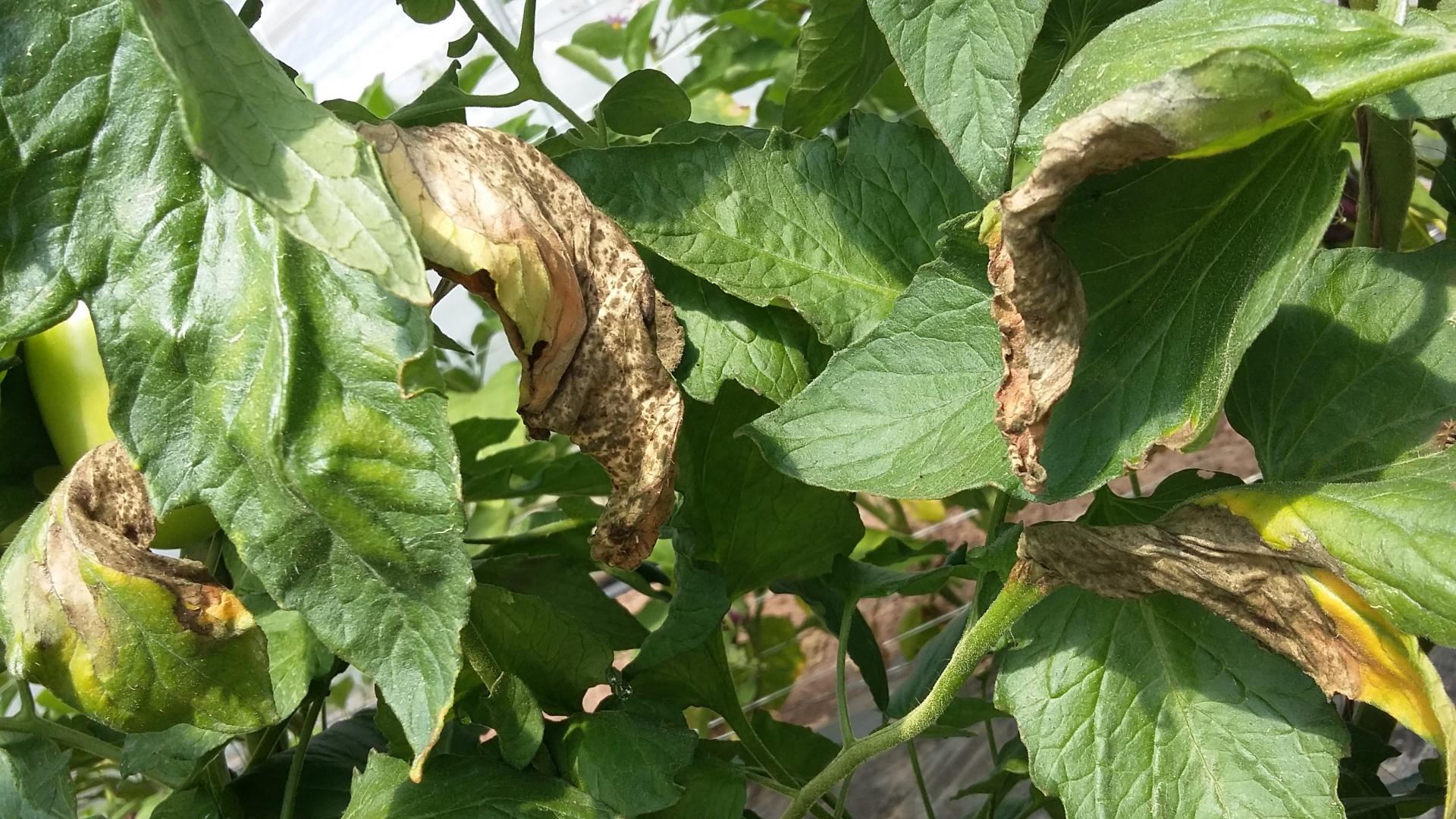
In many cases, downy mildew symptoms initially appear on the basal leaves (as spores overwinter in the soil in the form of mycelium), where irregular water-soaked spots develop and rapidly turn dark brown in colour. As the infection progresses, the lesions extend to surrounding tissues, causing widespread necrosis and collapse of the leaf blade.
Under conditions of high relative humidity, it is also possible to observe, on the underside of affected leaves, a characteristic whitish mould consisting of the reproductive structures of the pathogen (sporangia). The infection may also affect stems and petioles, causing loss of tissue thickness and firmness, leading to necrosis and/or breakage of certain parts.
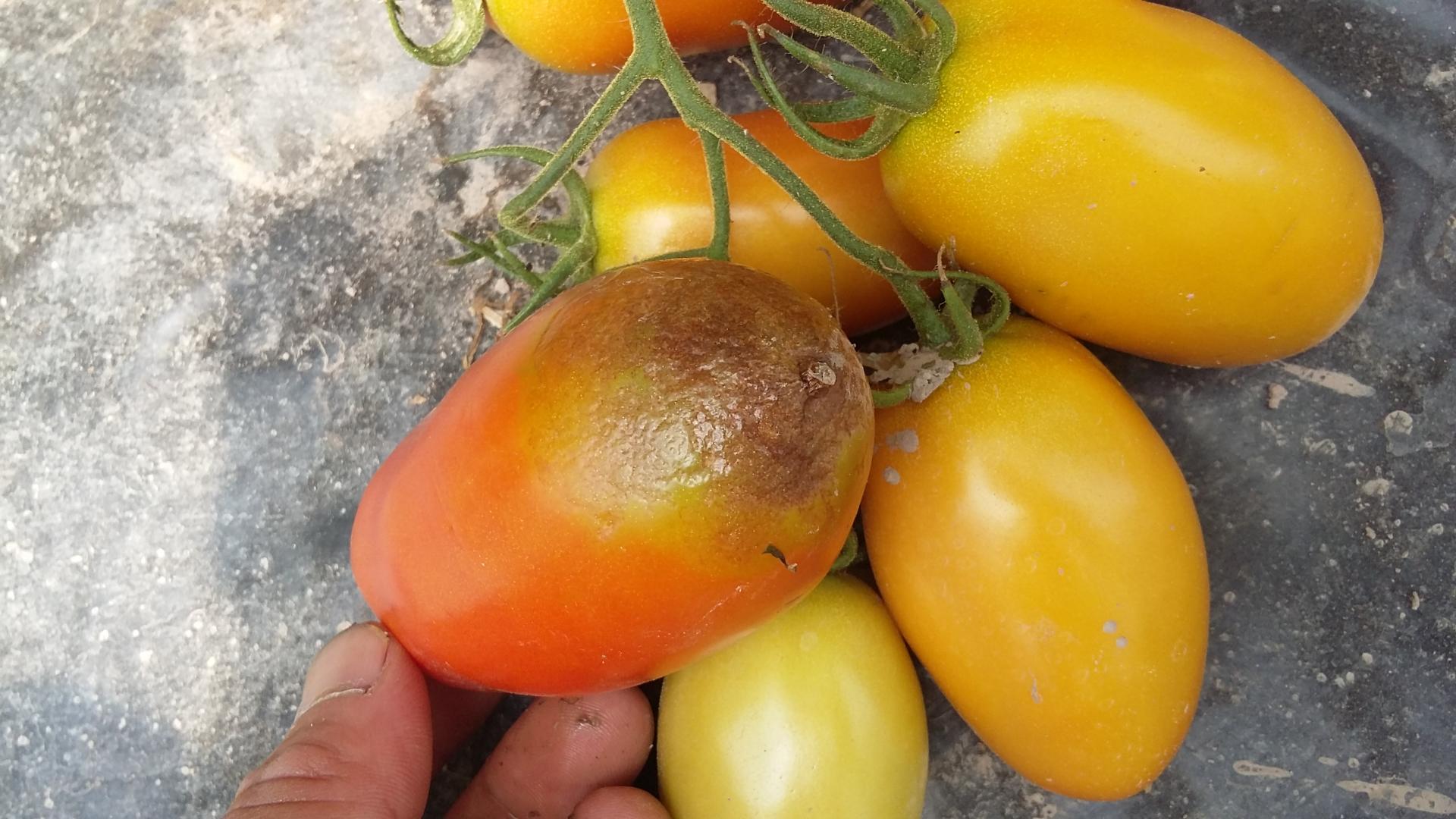
As regards the fruits, depressed necrotic lesions develop, accompanied by progressive commercial deterioration of the product (soft rot and tissue decomposition).
How to distinguish Tomato Downy Mildew from other leaf spots
Not all leaf spots observed on tomato plants can be attributed to downy mildew. An incorrect diagnosis may lead to misleading interpretations of the problem. Among the diseases most frequently confused with downy mildew is early blight (Alternaria), which can be recognised by the presence of rounded, concentric lesions, often characterised by the typical necrotic “target-like” appearance.
Other issues, such as Septoria leaf spot, bacterial leaf diseases or phytotoxicity caused by chemical/nutritional stress, often occurring simultaneously, may also produce apparently similar spotting during the initial stages, despite having completely different origins.
For this reason, correct identification should not be based solely on the presence of leaf spots, but requires an overall analysis of symptom morphology, its distribution on the plant, tissue degeneration, and the agronomic and climatic context in which it occurs.
Agronomic mistakes that favour the development of Tomato Downy Mildew
In addition to favourable climatic conditions, numerous agronomic mistakes can promote the development of tomato downy mildew by increasing crop vulnerability.
Among the most common mistakes are excessively high planting densities, which limit air circulation within the canopy and prolong the drying time of leaf surfaces.
Incorrect irrigation management, especially when it causes water stagnation or water films on the leaves, can also significantly increase the risk of infection.
To this must be added the failure to remove infected crop residues, poor agronomic hygiene, and the use of contaminated nursery and propagation material, factors that are often underestimated but play a decisive role in the overall phytosanitary pressure of the crop system.
Added to these factors is an increasingly important yet often overlooked issue: the accumulation of synthetic substances in soils cultivated for decades.
In a plant–soil system compromised by pollution, crops become weaker, less resilient to stress and more susceptible to phytopathological pressure.
How to prevent and reduce Tomato Downy Mildew
Paolo knows this well: when tomato downy mildew becomes clearly visible on the crop, the margin for intervention is already reduced.
For this reason, in professional tomato management, prevention represents the most effective strategy for limiting the impact of the disease. However, prevention does not simply mean avoiding the pathogen. It means creating the conditions that allow the plant to develop within a balanced environment, supplying energy to the agroecosystem.
A healthy crop, grown within an uncompromised plant–soil system and cultivated according to agronomic principles aligned with nature, expresses greater responsiveness to stress and a lower predisposition to disease development.
Creating a healthy and balanced growing environment
The prevention of tomato downy mildew begins with the management of the growing environment.
BioAksxter® acts in the prevention and reduction of tomato downy mildew as the only technical means with a decontaminating action. It restores the natural conditions of the crop through soil regeneration. Decontaminate to regenerate. Regenerate to cultivate properly. Why is this important?
The accumulation of synthetic substances in soils progressively alters soil fertility and compromises the plant’s root functionality. This imbalance is also reflected in the aerial part of the plant, increasing susceptibility to pathogens such as downy mildew.
It is important to use BioAksxter® from the soil preparation stage and throughout the entire tomato crop cycle. In this way, the natural defences of the plants are strengthened, making treatments with copper, sulphur or specific products less necessary and easier to manage. Furthermore, its purifying action on water and air helps restore an ideal growing environment.
Irrigation, planting density and temperature
From a microclimatic perspective, temperatures between 18°C and 25°C, combined with adequate air exchange, allow the crop to maintain an active physiological state, avoiding stress conditions that may increase susceptibility to plant diseases.
In open-field cultivation, on the other hand, the choice of plot/sector, field exposure and cover management play a decisive role in reducing water stagnation and conditions favourable to pathogen development.
As regards water management, the objective is to avoid water stress conditions that alter plant balance. Irrigation should preferably be managed at soil level, avoiding direct wetting of the leaves and scheduling irrigation during times of the day that allow rapid drying. Systems such as micro-irrigation/drip irrigation make it possible to control water supply more precisely, reducing the risk of creating conditions favourable to disease development.
Planting density also plays a decisive role in the prevention of tomato downy mildew:
- in intensive greenhouse cultivation, spacing generally ranges between 30–40 cm within the row and 80–100 cm between rows for compact-growth varieties such as cherry tomatoes;
- for medium-growth varieties (e.g. date/plum tomatoes or cluster tomatoes), spacing of 40–50 cm within the row and 90–120 cm between rows is generally adopted;
- for vigorous and spreading varieties such as oxheart tomatoes, spacing should be increased to 50–70 cm within the row and 100–140 cm between rows in order to ensure adequate canopy aeration.