The agricultural landscape as ecological infrastructure
When was the last time you truly observed an agricultural landscape?
Not the crops. The landscape.
Have you ever wondered why some fields are bordered by wild vegetation, tree lines, small watercourses and flower strips, while others stretch across vast expanses devoid of any natural features?
It may seem like a purely practical matter from a farming perspective, but those details perform essential functions. An agricultural landscape in which nature is still given space is a genuine form of ecological infrastructure: a living system in which every element contributes to the balance of the ecosystem as a whole.
There was a time when the agrarian landscape formed a complex, living mosaic: cultivated fields alternated with hedgerows, tree lines, ditches, meadows and wetlands. It may have appeared untidy and wild, yet it was deeply functional. Today, in many rural areas, that mosaic has been simplified almost to the point of disappearance. Increasingly large and uniform fields have replaced this complexity, and with it some plant and animal species have declined or disappeared altogether, along with the capacity of agricultural ecosystems to regulate themselves.
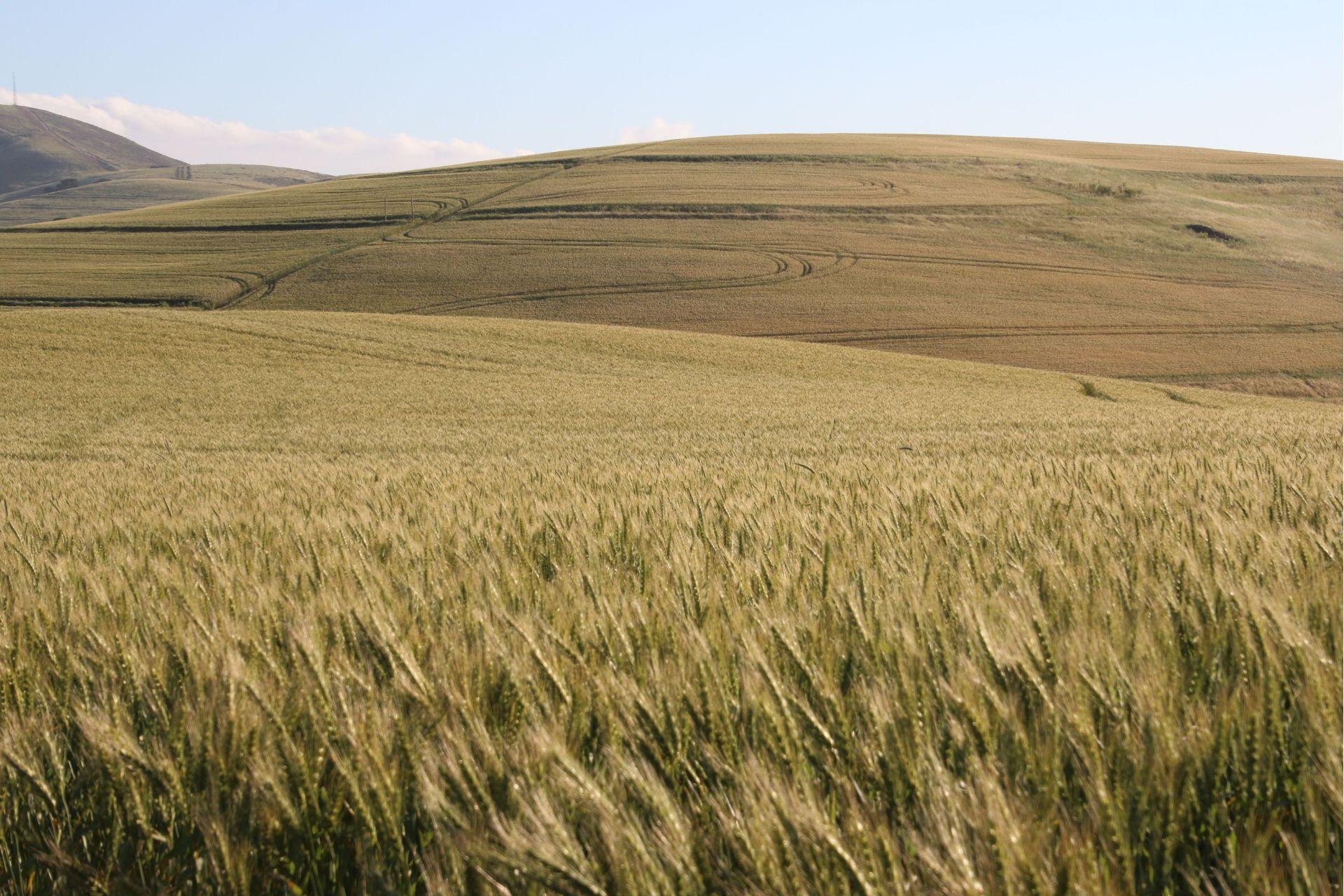
The agricultural landscape as a network of elements
An agricultural landscape was not simply a collection of cultivated fields. It was a complex network of natural areas and features interacting with one another and regulating the functioning of the agroecosystem as a whole.
A fragmented or excessively simplified landscape progressively loses its ability to sustain ecological balances, making agroecosystems more vulnerable to environmental stress and increasingly dependent on external interventions. By contrast, a diversified “agricultural mosaic” promotes ecological continuity and strengthens the resilience of the entire system. For example:
- permanent grasslands provide shelter and food resources for pollinators and beneficial insects throughout the year;
- watercourses and wetlands mitigate the effects of heavy rainfall and provide essential habitats for numerous plant and animal species;
- flower strips ensure a continuous supply of nectar and pollen, supporting pollinators and beneficial insects that act as natural enemies of major crop pests;
- soil regulates water flows, mineralises organic matter, nourishes plants and hosts an extraordinary community of organisms that sustain its fertility and biological functionality;
- buffer strips of spontaneous vegetation along watercourses retain sediments and filter excess nutrients, reduce surface runoff and help improve water quality;
- small woodland patches provide nesting and refuge sites for birds and help mitigate wind and temperature fluctuations.
Nothing in nature is accidental.
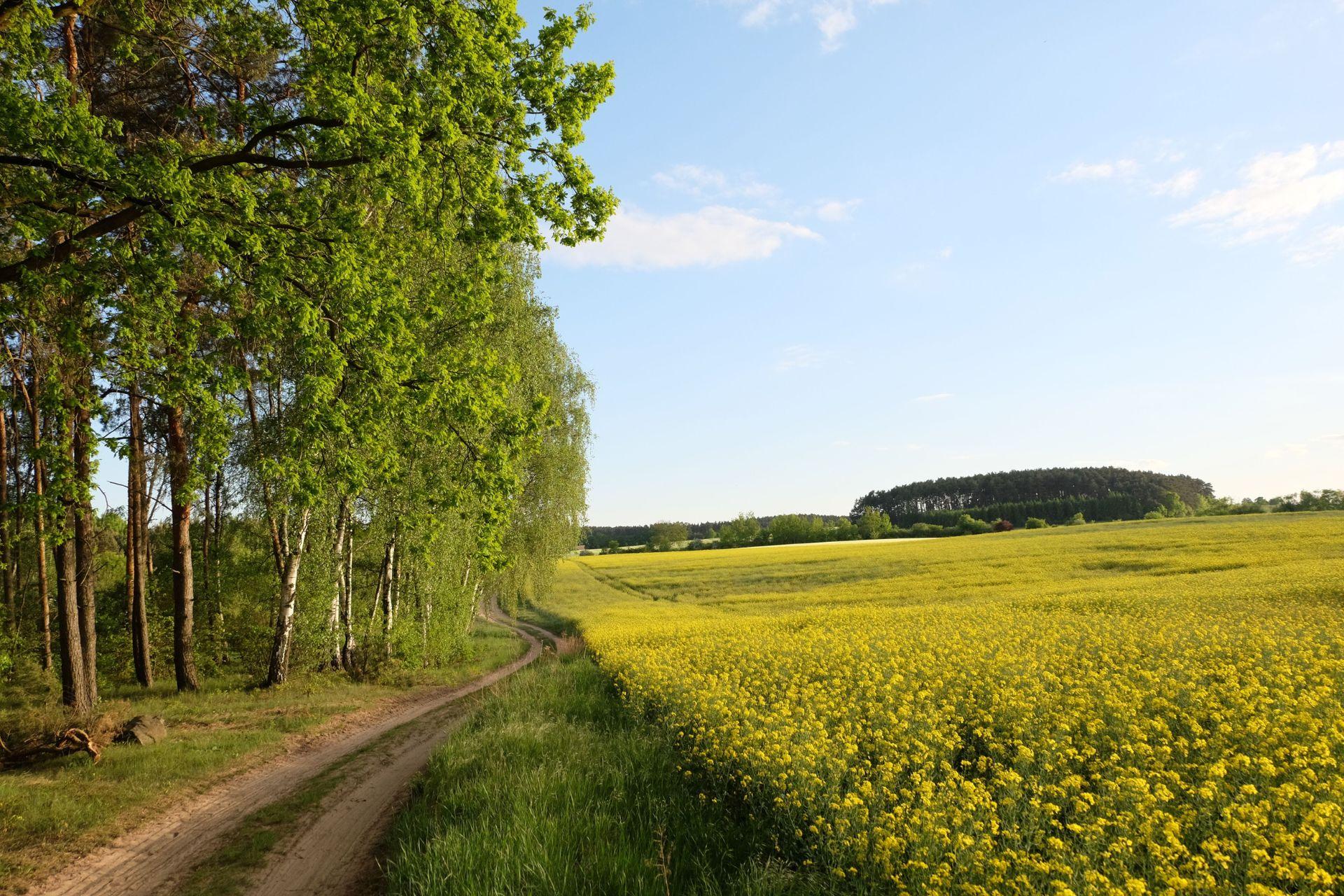
The involution of agricultural landscape from 1950s to the present
The agricultural landscape provides a fundamental key to understanding the vulnerabilities of modern agriculture.
Modern agriculture has not become fragile because it produces more - that is, because it is intensive. It has become fragile because it has progressively simplified the ecosystems on which it depends.
From the 1950s onwards, the primary objective of agriculture became the maximisation of productivity at the expense of all other forms of life. Mechanisation, crop specialisation, synthetic agrochemicals and the rationalisation of land use made it possible to increase yields as never before. However, this process also came at an ecological cost: the progressive destruction of the landscape and the loss of the relationships that maintained its equilibrium.
The consequence was not merely a decline in biodiversity, but above all a progressive loss of the self-regulating capacity of agroecosystems. Processes that were once sustained by interactions among soil, vegetation, fauna and water resources were progressively replaced by increasingly intensive technical inputs.
What was dispersed throughout the landscape to protect crops ultimately found its way back into everyday life through water, air and food, turning agricultural pollution into a public health issue.
The involution of the agrarian landscape is not the result of a single intervention, but of the cumulative effects of a series of transformations, including:
- land consolidation and enlargement of fields: to facilitate mechanisation and increase operational efficiency, many small plots were merged into increasingly extensive fields. This process reduced landscape heterogeneity and fragmented natural habitats.
- Monocultures: the progressive concentration of farms on a limited number of crops reduced plant diversity and simplified ecological networks, favouring the spread of crop pests, pathogens and biological imbalances.
- Intensification of soil tillage: deep cultivation and repeated mechanical operations altered the physical structure of the soil, accelerated the loss of organic matter and impaired part of its biological activity.
- Artificial regulation of water systems: the canalisation of watercourses, the drainage of wetlands and the modification of hydrographic networks reduced the capacity of the land to retain and naturally regulate water resources.
- Reduced crop rotations: increasingly short and repetitive crop sequences depleted soil fertility and increased dependence on synthetic inputs.
- Physical crop protection: the growing use of hail nets, anti-insect nets, tunnels and greenhouses has progressively altered the relationship between crops and the surrounding environment. These structures reduce exposure to weather events and certain harmful organisms, but they also restrict many natural ecological interactions, making agroecosystems increasingly dependent on artificial management.
- Artificialisation of production processes: the control of crop pests was entrusted to insecticides, while disease prevention and control were assigned to plant protection products. Soil fertility, meanwhile, was supported through chemical fertilisation designed to force the productive potential of crops. At the same time, the use of herbicides progressively removed ground cover and much of the spontaneous vegetation, further disrupting microbial balance and depriving numerous species of habitats and food resources.
Processes once regulated by the internal balance of the agroecosystem have progressively been entrusted to technical inputs. Put simply, agriculture has ceased to adapt to ecosystems and has begun adapting ecosystems to the requirements of production.
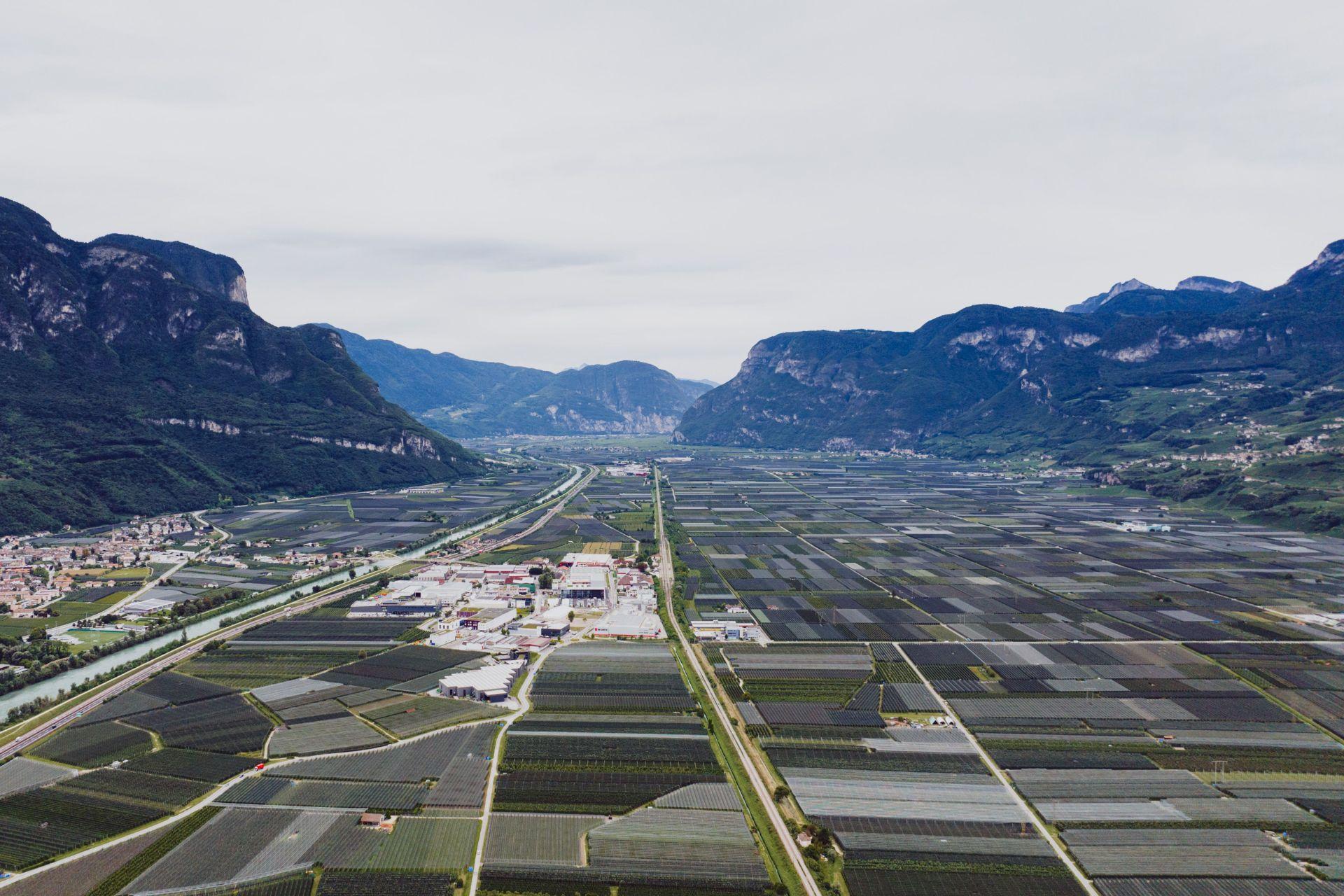
Alto Adige Wine Road – Artificialisation of agrarian landscape
The “cost” of agricultural landscape simplification: six emblematic cases
| Case | Dominant process | Consequences |
|---|---|---|
| Val di Non, Italy | Intensive apple monoculture | An entire valley transformed into an almost monocultural production system, where landscape simplification has drastically reduced ecological diversity and increased dependence on repeated plant protection treatments. Local communities are chronically exposed to pesticides, raising documented health concerns and fuelling a growing conflict between agricultural production, biodiversity conservation and the right to live in a healthy environment. |
| Po Valley, Italy | Intensive agriculture and livestock farming | The intensification of agricultural and livestock production has transformed one of Europe’s most fertile regions. The disappearance of natural features, combined with the extensive use of synthetic products and livestock effluents, has contributed to the degradation of agricultural soils and the deterioration of water quality. |
| Almería, Spain | Intensive greenhouse agriculture (“Mar de Plástico”) | More than 30,000 hectares of intensive greenhouses. The extensive use of plastic materials has promoted the accumulation of plastic waste and microplastics in agricultural soils and marine ecosystems, demonstrating how the pursuit of maximum productivity can transfer environmental impacts far beyond farm boundaries. |
| East Anglia, United Kingdom | Intensive cereal production | The progressive expansion of intensive cereal production has transformed vast rural areas into large cultivated surfaces increasingly deprived of hedgerows, grassy margins and linear habitats. The most visible consequence has been the decline of farmland birds: skylarks, buntings, turtle doves and many other species have lost nesting sites, shelter and food resources. Their disappearance also entails the loss of valuable natural predators of crop pests. |
| Cerrado, Brazil | Intensive monocultures of soybean, maize and cotton | Millions of hectares of the Cerrado, South America’s largest tropical savanna, have been converted into extensive monocultures of soybean, maize and cotton. In addition to habitat loss, this transformation has depleted water resources, reduced the ability of soils to maintain their fertility and compromised one of the planet’s most important natural carbon reservoirs. |
| Central Valley, California | Intensive irrigated agriculture | High agricultural productivity is sustained by extensive irrigation and groundwater extraction. Over time, this dependence has contributed to the depletion of underground water reserves, land subsidence and the growing vulnerability of the agricultural system to drought and climate change. |
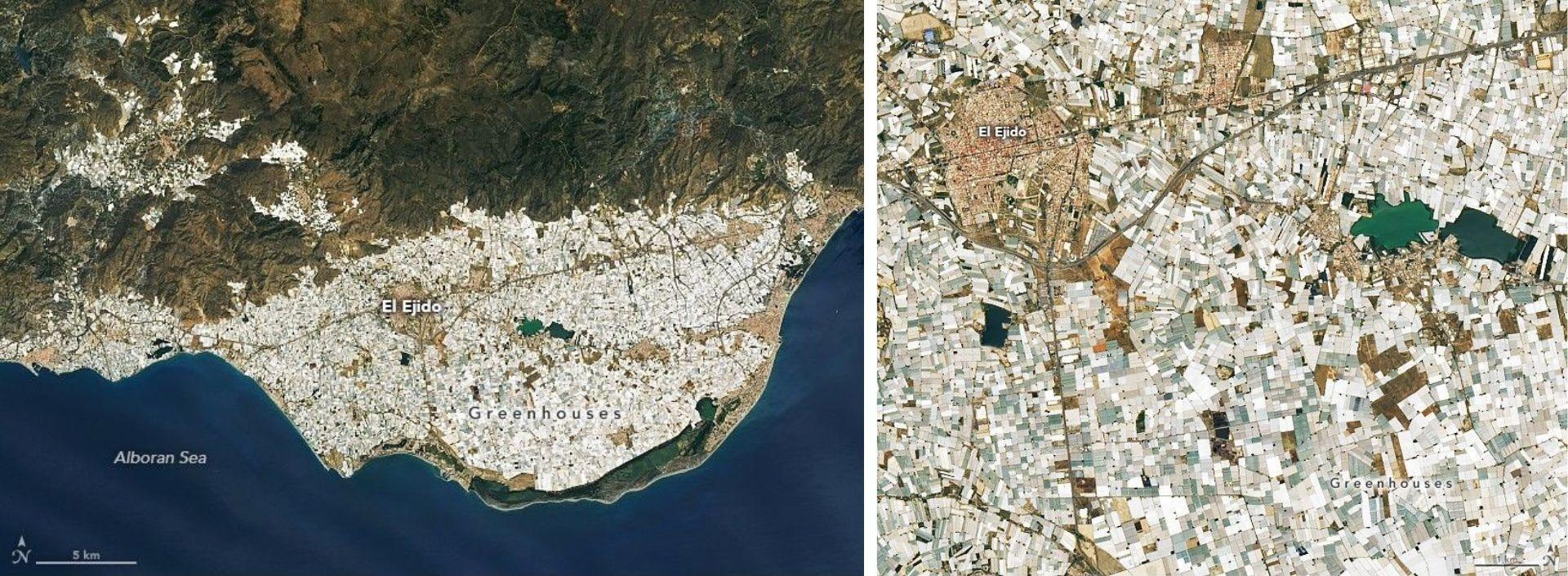
NASA Earth Observatory – Landsat image of the “Sea of Greenhouses”
The paradox of modern agriculture: the more you simplify, the more dependent you become
Why has an apparently more efficient agricultural system also become more dependent?
The paradox lies precisely in this transition: landscape simplification reduces biological complexity, but increases management complexity and the agricultural system’s dependence on external resources. The result is a production model that is highly productive in the short term, yet characterised by lower ecological resilience and greater exposure to biotic, abiotic and climatic stresses.
Dependence on external inputs entails not only economic costs and a loss of autonomy: it also releases a contaminant load into the environment that ultimately affects the health of rural communities and consumers.
Put simply, modern agriculture is consuming its own future, turning food production into a process of self-destruction.
Soil pollution represents the most critical factor affecting the functionality of agroecosystems. The accumulation of contaminants alters biological processes within the soil, compromising fertility, biodiversity and productive capacity. The use of BioAksxter® depolluting fertilisers restores the biological conditions of the soil by progressively eliminating contaminants, thereby stabilising microbial activity and the development of microorganisms antagonistic to pathogens.
The link between agricultural landscapes and biodiversity
An agroecosystem consisting exclusively of cultivated land provides limited and discontinuous resources, whereas a heterogeneous landscape offers feeding, shelter, breeding and overwintering sites for numerous species of wild fauna and spontaneous flora.
Each organism uses the landscape differently: pollinators require a continuous succession of flowering resources; birds seek suitable nesting sites and food sources; while amphibians, reptiles and mammals depend on the presence of diverse, interconnected habitats. When these connections are disrupted, populations become progressively more isolated, reducing their ability to survive, reproduce and perform the ecological functions that sustain the agroecosystem.
A species rarely survives through a single isolated habitat. In most cases, populations are distributed across small local clusters occupying different habitats and remain interconnected through the movement of individuals. If a local population becomes extinct, the area may be recolonised by individuals arriving from neighbouring habitats, provided that the landscape retains sufficient ecological connectivity.
In ecology, this model is known as a metapopulation: a group of populations that are spatially separated but connected through continuous processes of dispersal and recolonisation. When the landscape becomes fragmented and habitats lose their connectivity, these exchanges are progressively disrupted, increasing the risk of local species extinction.
Agricultural biodiversity depends primarily on soil health, which is often compromised by pollutants of agricultural and industrial origin. Scientific studies show that the use of BioAksxter® depolluting fertilisers promotes soil biodiversity by increasing the biological activity and functional capacity of soil organisms. Biologically active soil provides the foundation for essential ecosystem services within agricultural systems.
Agricultural landscapes in the face of climate change
An agricultural landscape rich in natural features cannot prevent climate change, but it can mitigate its effects at the local scale. Hedgerows, permanent grasslands, tree lines, wetlands and soils rich in organic matter help retain water, moderate temperature extremes, limit erosion and promote greater ecological stability during more intense climatic events.
Climate change does not affect all agricultural landscapes in the same way. Under the same precipitation or temperature conditions, a simplified agroecosystem responds very differently from a landscape rich in ecological connections. The difference lies in the capacity of the land to absorb and mitigate the effects of climatic disturbance.
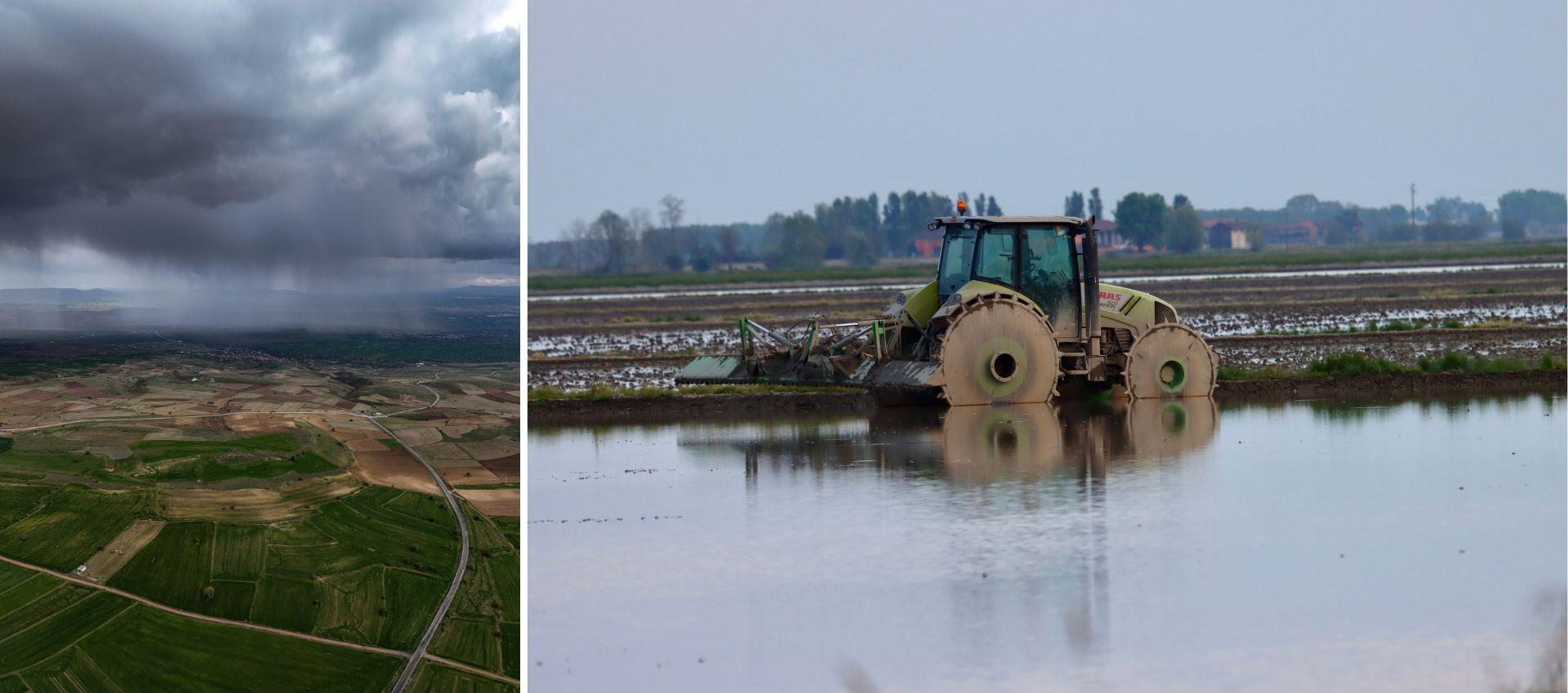
As already explored in the BioAksxter Magazine article “Climate Change and Agriculture”, climate is not an external variable in agriculture, but a factor that acts primarily on systems that are already fragile. Without rethinking the agricultural landscape, every extreme event becomes a permanent crisis. This is why, once again, agriculture must be decontaminated and rethought. Decontaminating the soil and restoring its biological functionality means strengthening the agroecosystem’s capacity to withstand climate change.
Rethinking how we design and manage the rural landscape
The Common Agricultural Policy’s recent interest in agricultural landscapes and eco-schemes is often presented as an environmental turning point. In reality, this change of direction comes after decades of policies that encouraged the simplification of agricultural systems, the systematic removal of natural features and the transformation of rural land into an increasingly uniform productive surface.
For a long time, the removal of hedgerows, ditches, field margins and non-productive areas was not only tolerated, but implicitly encouraged in the name of efficiency, competitiveness and increased yields. Today, those same landscape features are being reintroduced through compensatory measures, incentives and voluntary schemes, as though their ecological value were a recent discovery rather than the result of practices established over centuries.
Eco-schemes aim to “repair” an agricultural landscape progressively impoverished by the very same political rationale that shaped modern agriculture. Yet these measures often operate in a fragmented and reversible manner, without genuinely challenging the production model that created the problem in the first place.
This contradiction reveals a recurring feature of human action: the determination to simplify systems until their functioning is compromised, only to attempt to reconstruct them through partial and belated solutions. Landscape ecology clearly shows that the problem is not a lack of technical tools or scientific knowledge, but a deeper limitation in the way human beings design, exploit and repeatedly attempt to correct their own production systems.
It is the expression of a profoundly self-destructive dynamic.
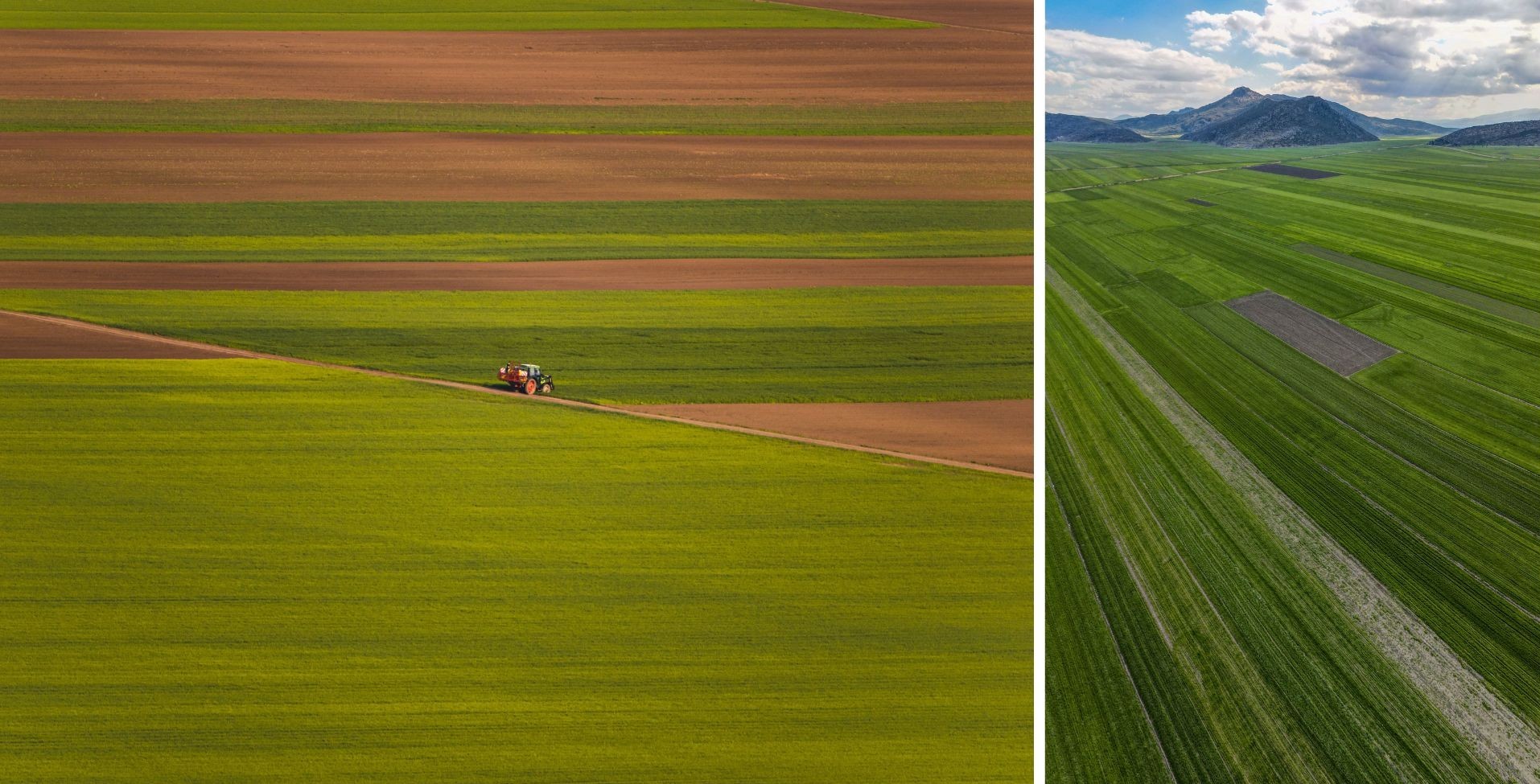
Environmental restoration policies are increasingly confronted with agricultural systems marked by a legacy of soil pollution. BioAksxter® was created precisely for this purpose: to restore environmental matrices and thereby make sustainable cultivation possible.
If we want healthy agriculture that works in harmony with natural processes, the tools we use must also fit within that balance.